When discussing the individuals who shaped Paisley into Scotland's largest town, one name towers above the rest: Thomas Coats. The threadmaker who transformed a modest family business into a global industrial empire didn't merely create wealth—he fundamentally reimagined what Paisley could become. His legacy remains visible across Renfrewshire today, from the architectural monuments that bear his family name to the industrial heritage that still defines the town's character.
Thomas Coats: From Humble Beginnings to Industrial Giant
Born in 1809 in Paisley, Thomas Coats entered a world already buzzing with textile innovation. His father, James Coats, had established a small thread-making operation, but it was Thomas and his brother James Jr. who would elevate the family name to international prominence. The Coats family understood something fundamental about Paisley: the town's weavers possessed unmatched skill, and the local cotton thread industry had potential far beyond Scotland's borders.
By the 1830s, Thomas Coats had begun expanding operations with remarkable vision. He recognised that industrialisation wasn't simply about machinery—it required investment in people, infrastructure, and innovation. The Ferguslie Thread Works, established under his leadership, would become one of the largest thread manufacturing complexes in the world, employing thousands of Paisley residents and exporting to six continents.
Revolutionary Manufacturing Methods
What set Thomas Coats apart from his competitors wasn't just ambition—it was his willingness to embrace new technology. He invested heavily in mechanisation at a time when many Renfrewshire manufacturers remained wedded to traditional methods. Steam-powered machinery, innovative dyeing techniques, and quality control processes transformed Coats thread into a premium product recognised worldwide.
The Ferguslie Works grew to encompass multiple mills, each specialising in different aspects of production. Workers in Paisley became expert in processes that remained mysteries to competitors elsewhere. This concentration of skill and technology made Paisley synonymous with quality thread manufacturing throughout the Victorian era.
Philanthropy That Rebuilt Paisley's Landscape
Thomas Coats understood that industrial success carried moral obligations. Unlike many Victorian industrialists who extracted wealth from their communities, Coats reinvested substantially in Paisley itself. His philanthropic vision fundamentally altered the town's physical and social infrastructure in ways that remain relevant today.
The Coats Observatory, gifted to Paisley in 1883, stands as one of his most enduring contributions. Built atop Oakshaw Hill, this astronomical and meteorological facility provided public access to scientific knowledge at a time when such resources remained confined to universities and private institutions. The observatory continues to welcome visitors, maintaining its mission of public education more than 140 years after its founding.
Architectural Monuments to Civic Pride
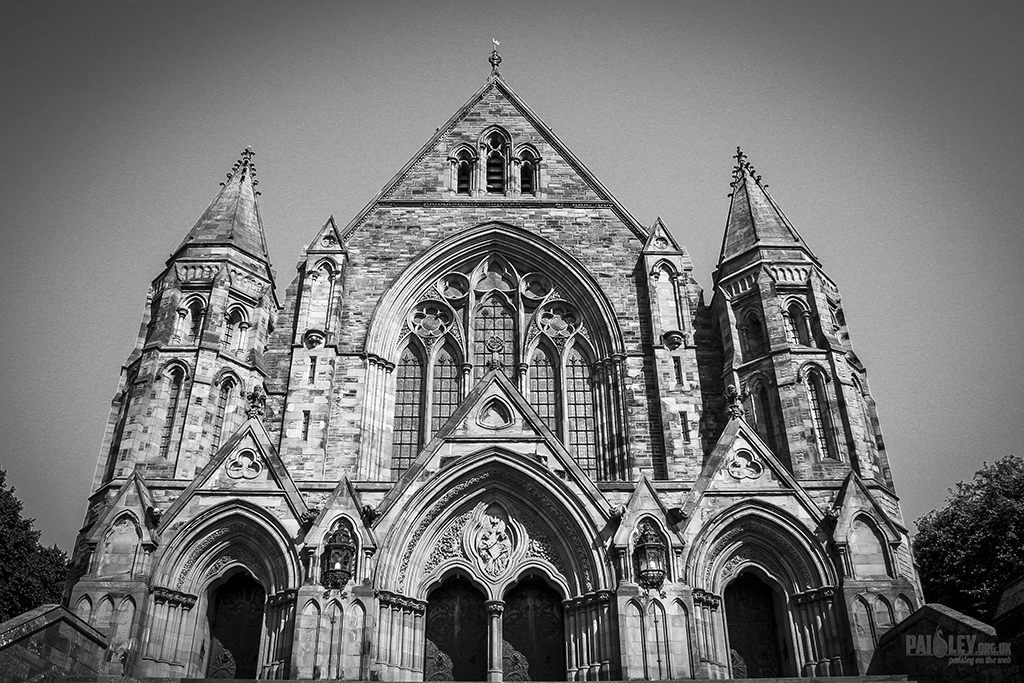
The Thomas Coats Memorial Baptist Church, completed in 1894, dominates Paisley's skyline with its soaring Gothic Revival spire. Built by Thomas's sons in his memory, this architectural masterpiece cost £70,000—an extraordinary sum representing genuine commitment to community enhancement rather than mere vanity. The church's intricate stonework and stunning interior craftsmanship employed local artisans, supporting Paisley's broader economy while creating a landmark that would define the town centre for generations.
Coats also funded educational facilities, recognising that Paisley's future prosperity depended upon an educated workforce. His contributions to schools and libraries throughout Renfrewshire provided opportunities for working-class children that would have remained unimaginable otherwise. This investment in human capital helped sustain Paisley's economic vitality well into the twentieth century.
The Global Reach of Paisley Thread
By the 1870s, J. & P. Coats—the company Thomas built with his brother—had become the world's largest thread manufacturer. Paisley thread could be found in tailors' shops from New York to Mumbai, from London to Melbourne. The phrase "Coats thread" became synonymous with reliability and quality across international markets.
This global success transformed Paisley from a regional textile centre into an industrial powerhouse with genuine international significance. The town's population swelled as workers migrated from across Scotland and Ireland, seeking employment in the expanding mills. Paisley Town Centre flourished with new shops, banks, and services catering to this growing, increasingly prosperous population.
Innovation in Marketing and Distribution
Thomas Coats pioneered marketing strategies that seem remarkably modern. He understood brand recognition, ensuring that Coats thread came in distinctive packaging that consumers could identify instantly. Distribution networks stretched across continents, with company agents establishing relationships with retailers in markets most British manufacturers ignored.
The company also invested in overseas manufacturing, establishing facilities in the United States, Canada, and Russia. This globalisation strategy, revolutionary for its time, protected Coats from trade barriers while allowing the company to maintain quality control and competitive pricing across diverse markets.
Working Conditions and Social Responsibility
While Victorian factories often earned notorious reputations for exploiting workers, the Coats mills in Paisley operated under comparatively enlightened policies. Thomas Coats recognised that productivity depended upon worker welfare—a connection many contemporaries failed to grasp.
The Ferguslie Works provided facilities unusual for the era: washrooms, canteens, and even recreational spaces for employees. Working hours, though long by modern standards, were often shorter than those in competing mills. Coats also supported housing developments in Paisley, understanding that quality accommodation contributed to workforce stability and wellbeing.
This paternalistic approach had limitations, certainly. Workers remained subject to strict discipline and had little voice in company governance. Nevertheless, Coats's policies represented progressive thinking within the Victorian industrial context, setting standards that other Renfrewshire manufacturers gradually adopted.
Legacy Beyond Thread: How Coats Shaped Modern Paisley
Thomas Coats died in 1883, but his influence on Paisley extends far beyond the industrial structures he built. The philanthropic tradition he established continued through subsequent generations of the Coats family, who funded the Paisley Museum and numerous other civic improvements. This pattern of wealthy industrialists contributing to community infrastructure became embedded in Renfrewshire's civic culture.
The architectural landmarks funded by Coats money remain among Paisley's most significant attractions. Visitors exploring Paisley's heritage sites inevitably encounter the Coats name, whether at the observatory, the memorial church, or various civic buildings throughout the town centre. These structures provide tangible connections to Paisley's industrial zenith, reminding contemporary residents of the town's global significance during the Victorian era.
Educational Impact Across Generations
The Coats Observatory continues fulfilling its educational mission, hosting school groups and public events that connect Paisley residents with scientific inquiry. The facility's collection of historic instruments and meteorological records provides valuable resources for understanding Scotland's climate history. This ongoing educational function represents precisely the kind of lasting benefit Thomas Coats envisioned.
Similarly, schools and libraries funded by Coats philanthropy helped establish Paisley as an educational centre within Renfrewshire. The emphasis on accessible learning opportunities contributed to social mobility, allowing working-class Paisley families to improve their circumstances through education—a revolutionary concept in Victorian Britain.
The Decline of Thread Manufacturing and Paisley's Adaptation
The twentieth century brought challenges Thomas Coats could never have anticipated. Global competition, changing fashion trends, and synthetic materials gradually eroded Paisley's dominance in thread manufacturing. The Ferguslie Works, once employing over 7,000 workers, eventually closed in the 1990s, marking the end of an industrial era.
Yet Paisley adapted, partly because the diversity Thomas Coats had encouraged—in education, architecture, and civic infrastructure—provided foundations for economic transformation. The town's identity expanded beyond thread manufacturing to embrace its rich cultural heritage, including the world-famous Paisley pattern and connections to Paisley Abbey's medieval history.
Today, efforts to regenerate Paisley Town Centre often reference the town's industrial heritage with pride. The architectural monuments funded by Thomas Coats serve as anchors for heritage tourism, attracting visitors interested in Scotland's industrial past. Former mill buildings have found new purposes, converted into housing, creative spaces, and community facilities that honour their history while serving contemporary needs.
Remembering Thomas Coats in Contemporary Paisley
Walk through Paisley today, and Thomas Coats's influence remains unmistakable. The soaring spire of his memorial church still dominates the skyline. The observatory continues welcoming visitors to gaze at the stars. Streets bear his family name, and local history societies preserve records of the industrial empire he built.
Coats represents a particular type of Victorian industrialist—ambitious and profit-driven, certainly, but also conscious of broader social responsibilities. His understanding that business success depended upon community investment created a philanthropic model that benefited Paisley for generations. While we can critique the paternalism and inequality inherent in Victorian capitalism, we can also recognise genuine commitment to civic improvement.
For contemporary Paisley, Thomas Coats's legacy offers both inspiration and instruction. His willingness to invest in infrastructure, education, and community amenities demonstrated long-term thinking that transcended immediate profit. As Renfrewshire navigates twenty-first-century economic challenges, that same commitment to community investment—updated for modern contexts—remains relevant.
Final Thoughts
Thomas Coats transformed Paisley from a regional textile centre into a globally significant industrial powerhouse, but his true legacy extends beyond commercial success. The threadmaker who built an empire also built schools, churches, observatories, and civic facilities that enriched countless lives. His story reminds us that business leadership carries responsibilities to the communities that enable commercial success. As Paisley continues evolving, the architectural and institutional landmarks bearing the Coats name stand as permanent testaments to one man's vision for what Scotland's largest town could become. What aspects of Thomas Coats's legacy in Paisley resonate most with you? Share your thoughts and memories of these historic landmarks that continue shaping our community today.