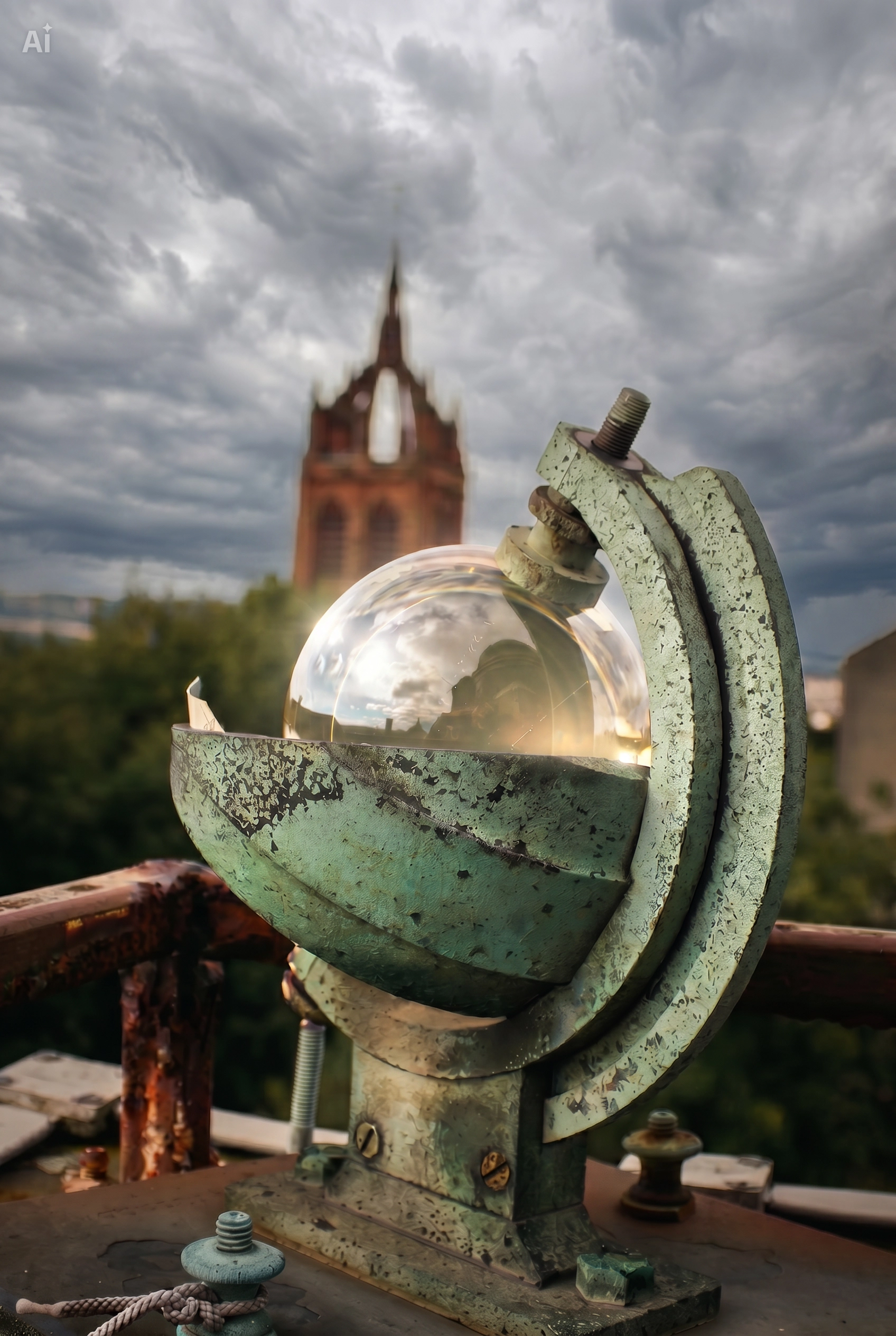
When you think of historic scientific instruments, you might picture telescopes or thermometers. But tucked away at Paisley's Coats Observatory is something far more poetic—and equally ingenious. The Campbell-Stokes Sunshine Recorder is a device so beautifully simple yet remarkably effective that it's been recording the sun's presence for well over a century.
How It Works
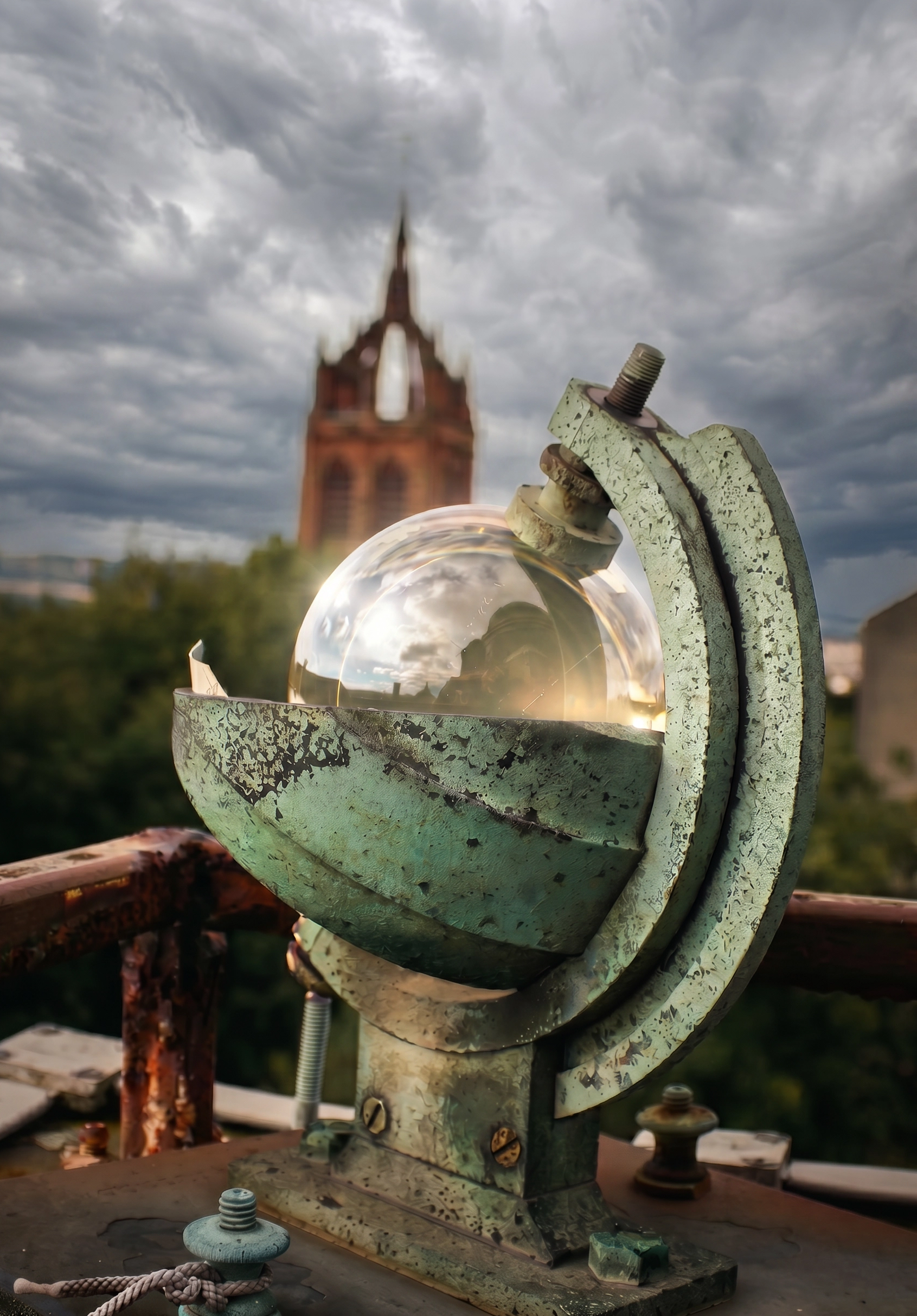
The Campbell-Stokes recorder is basically a glass ball acting as a magnifying glass. As the sun moves across the sky throughout the day, this sphere focuses the sun's rays onto a specially prepared paper strip beneath it. When the sunlight is strong enough, it literally burns a mark onto the paper—creating a continuous trace of sunshine intensity and duration. It's not metaphorical; the instrument actually burns the record of the day's weather directly into the material.
The genius of this design lies in its simplicity. There are no complex electrical components, no batteries to fail, no recalibration needed. Just the sun, a glass ball, and a piece of paper. Yet this humble setup provides incredibly valuable data about sunshine hours—information that meteorologists, climatologists, and researchers still rely on today.
Why It Matters
For more than 150 years, Coats Observatory has been keeping detailed weather records. These historical sunshine measurements are irreplaceable. They show us how the local climate has changed over time, reveal patterns in Paisley's weather, and contribute to our understanding of broader climate trends. When researchers want to study long-term climate patterns or validate modern satellite weather data, institutions like Coats Observatory provide the golden standard—consistent, carefully maintained records stretching back generations.
The Campbell-Stokes recorder is also a reminder of an era when scientific observation required patience and direct interaction with nature. There's something compelling about a device that depends on the actual presence of the sun, burning its own evidence into the record.
Still Recording
What makes Coats Observatory even more remarkable is that this Victorian-era instrument is still in use. While modern weather stations bristle with electronic sensors and computer interfaces, the Campbell-Stokes recorder continues its daily work, faithfully documenting Paisley's sunshine just as it has for over a century. It stands as a testament to brilliant design and the enduring value of consistent, meticulous observation.
If you visit Coats Observatory, spare a moment to appreciate this elegant piece of scientific heritage. It's a small glass sphere with a big story—one written in sunshine, literally one day at a time.