At 23 High Street in Paisley, a three-storey front of glazed brick still faces the street. It opened in 1912 as the Picture House cinema, designed by the architect George A Boswell, with an interior of columns topped by gilded capitals. It became a bingo hall in the 1960s and finally closed in the 1980s, according to Historic Environment Scotland’s record for the building, which was listed in 1985 and is now category B. The auditorium behind that front was demolished in the late 1980s, and a shopping centre was built in its place.
Paisley’s Picture House was far from the only cinema to take that path. Historic England has written that home entertainment, starting with television in the 1950s, helped bring about the decline of cinemas, and that the change in gaming law in 1960 “allowed Bingo to come to the rescue”. Some tried to have it both ways, operating as a cinema for a few nights a week and a bingo hall for the rest. In plenty of towns, the old picture house simply became a different kind of night out.
Fewer halls, and a different game inside
The halls have been closing for a long time. There were more than 900 licensed bingo clubs in 1995, according to the fact-checking organisation Full Fact, and the Bingo Association counted 585 clubs in 2005 and 383 by 2014. When the Treasury marked the end of bingo duty in December 2025, it put the number at around 250, fewer than half the 2005 figure, supporting about 7,000 jobs. A Treasury minister described bingo clubs as being “about community, friendship and fun”.
Tax has been part of the story. Full Fact found that licensed premises dipped in 2010 after the previous year’s Budget raised bingo duty. The duty was halved in 2014, and it was abolished altogether from 1 April 2026. On the same day, remote gaming duty, which the government says covers online slots and casino games, rose from 21 to 40 per cent, a clear sign of which kind of evening ministers would rather tax less.
The halls that remain also earn their money differently. In 2008-09, licensed bingo premises in Great Britain kept £703.1 million in gross gambling yield, the money left after winnings are paid out, and £489.6 million of it came from bingo itself, with machines making up the other £213.5 million. In the year to March 2026 the total was almost identical, at £703.8 million, but only £242.1 million came from bingo. The other £461.7 million came from gaming machines, according to the Gambling Commission.
Where the night out went
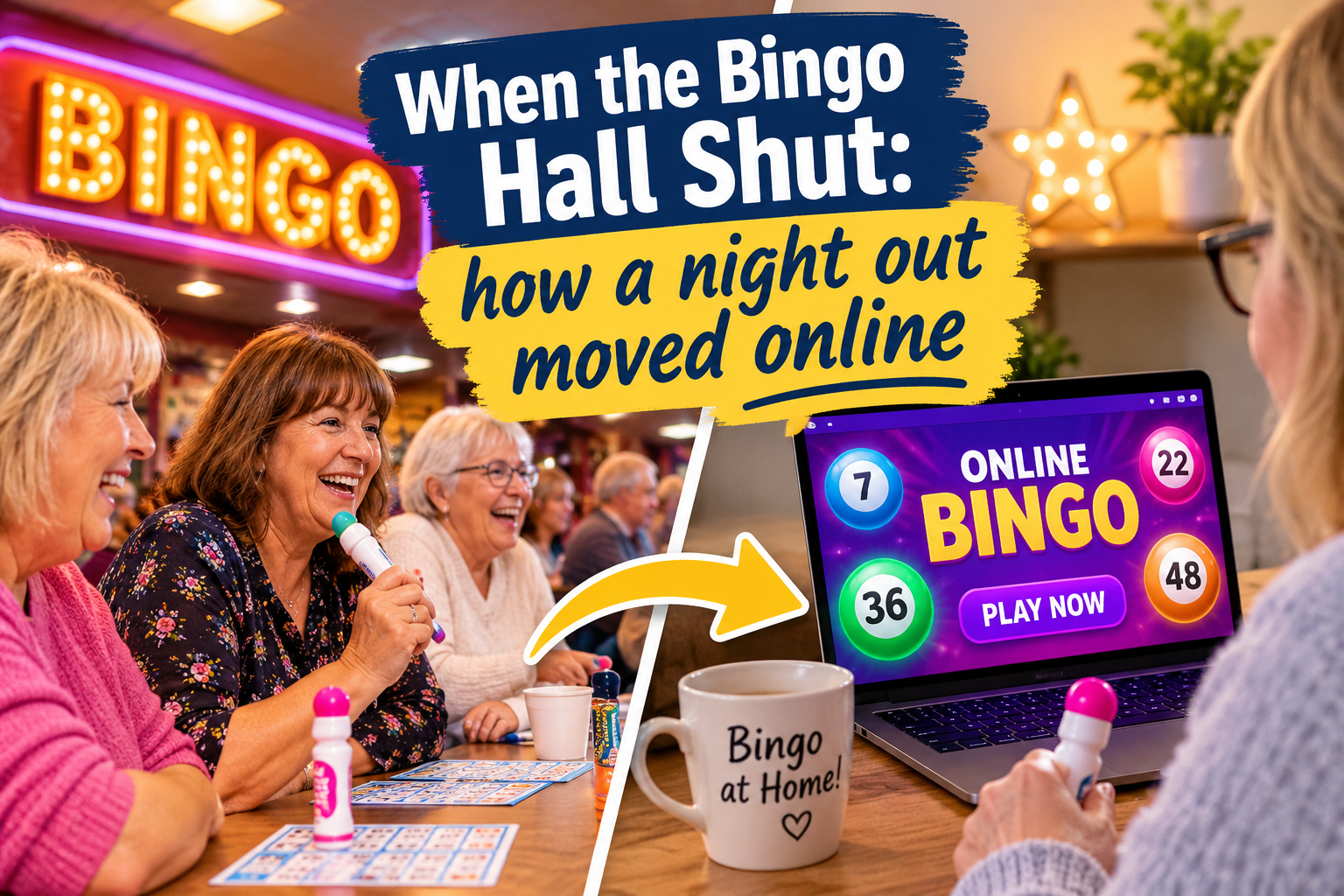
The night out has moved online, but not always to bingo. The Commission’s figures show online bingo bringing in £147.8 million in the year to March 2026, less than the bingo played in halls and down from £188.7 million three years earlier. The amount staked on online bingo has fallen too, from almost £1.5 billion in 2015-16 to £882.2 million. Online slots, by contrast, brought in almost £4.8 billion.
Some of the same names turn up in both places. Barcrest, whose machines once featured widely in bingo clubs across the UK, now reaches players online and on mobile as well, and Fortune Games’ Rainbow Riches guide explains how one of its slots works: five reels, 20 paylines, an Irish good-luck theme and three bonus games, Road to Riches, Wishing Well and Pots of Gold, in place of free spins.
What a phone cannot offer is the room itself: the hush before the first number, the caller’s rhythm, the groan that goes round when someone else shouts “house” a number too soon. That shared atmosphere is the hardest part of a night out to move online, however good the app, and it is what a town loses when a hall closes for good.
What the High Street remembers
In Paisley, the old Picture House front is a reminder of how much a town’s evenings can change in a century. It has served as a cinema, a bingo hall and the face of a shopping centre, each one the main event in its time.
The bingo hall itself may not be finished yet. With bingo duty gone and the Commission recording a rise of more than 8 per cent in takings at licensed bingo premises in the year to March 2026, the clubs that remain have a little more room to breathe. They just look rather different from the one that shut its doors on Paisley’s High Street in the 1980s.
18+ only. Treat any game as paid entertainment, never a way to make money. Free, confidential help 24/7: National Gambling Helpline, 0808 8020 133.