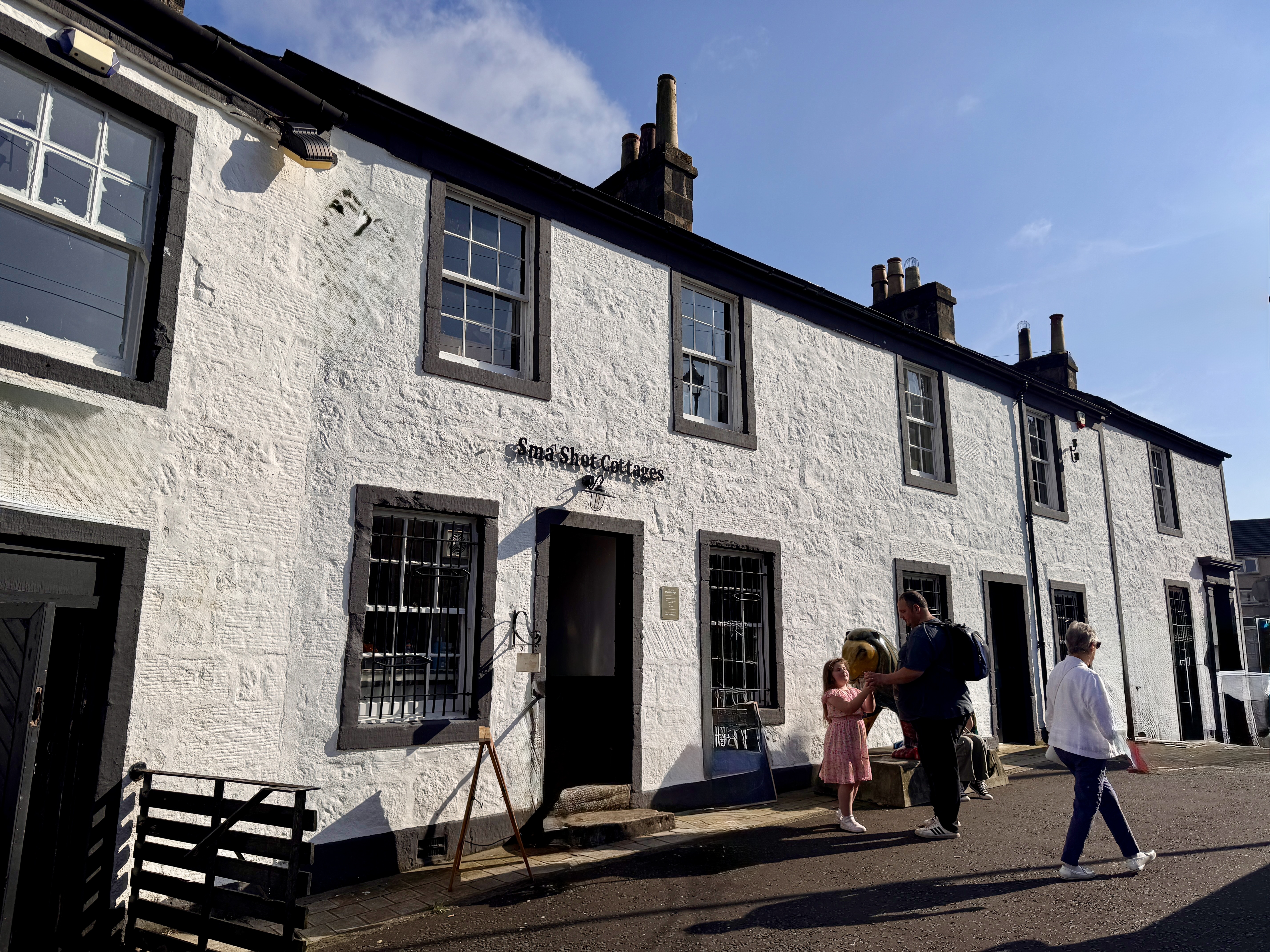
Step Back in Time at Sma' Shot Cottages, Paisley
If you want to truly understand what made Paisley the town it is today, there's no better place to start than Sma' Shot Cottages. This extraordinary wee complex offers a window into two distinct chapters of the town's weaving heritage — and it's one of the most unique visitor attractions in Scotland.
Best of all? Entry and the guided tour are completely free.
Two Buildings, Two Eras
The oldest of the two buildings is a weaver's cottage dating from the early 1750s — one of the earliest known homes of a journeyman weaver associated with the Incorporation of Old Weavers in Paisley. Step inside and you'll find original weaving looms still in place, bringing the craft vividly to life. It's a humbling and fascinating glimpse into the skill and effort that went into every thread.
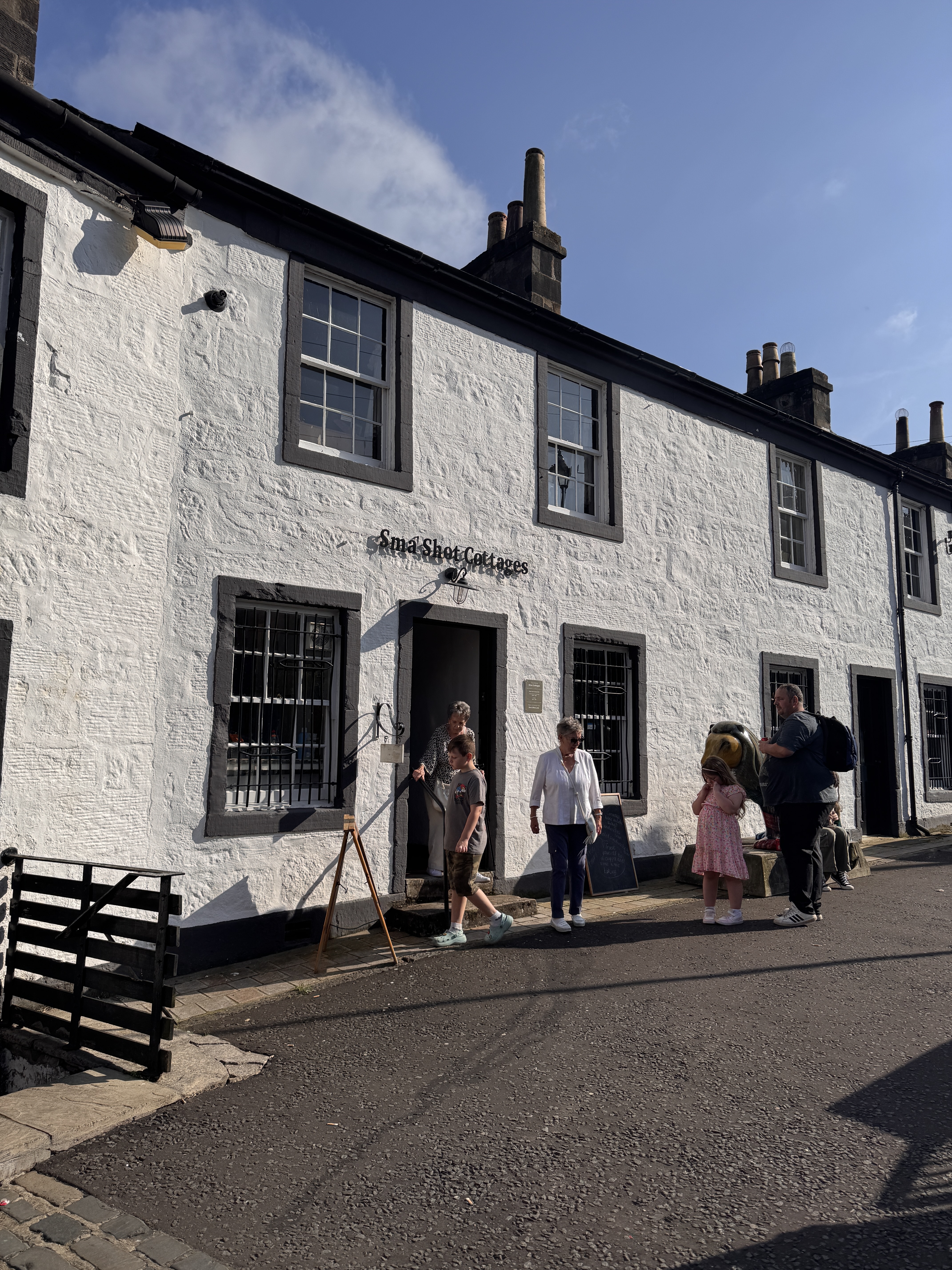
Cross the yard and you'll find yourself in a very different era — a row of mill workers' houses from the 1840s, one of which has been carefully preserved as the home of a mill foreman. Wander through the kitchen and living area, bedroom, children's room and parlour, and you get a real sense of what day-to-day family life looked like in mid-19th century Paisley. The attention to detail is remarkable.

The Story of the Sma' Shot
The cottages are also the home of a truly inspiring story. The Sma' Shot was a cotton thread used to bind the beautiful weft threads of Paisley's famous shawls together — but because it was invisible in the finished garment, the manufacturers refused to pay the weavers for it. The weavers had to buy the thread themselves, all while knowing their work would fall apart without it.
After a long and determined struggle, the weavers won. The manufacturers backed down, and in their honour, the first Saturday in July was renamed Sma' Shot Day in 1856. The tradition lives on to this day, with an annual parade and celebration that remains one of the oldest workers' festivals in the world.
Come for a Visit
Knowledgeable volunteers lead tours around the site — just drop in during opening hours and you'll be warmly welcomed. No booking needed for individuals or small groups.
Pop into the tea room for a cup of something warm and a slice of homemade baking, and browse the gift shop before you go.
Opening hours (April to September): Wednesday 12 noon – 4pm | Friday 1pm – 5pm | Saturday 12 noon – 4pm
The cottages also open specially for the Paisley Christmas Lights switch-on at the end of November — a lovely festive treat.
Find out more at smashotcottages.com.
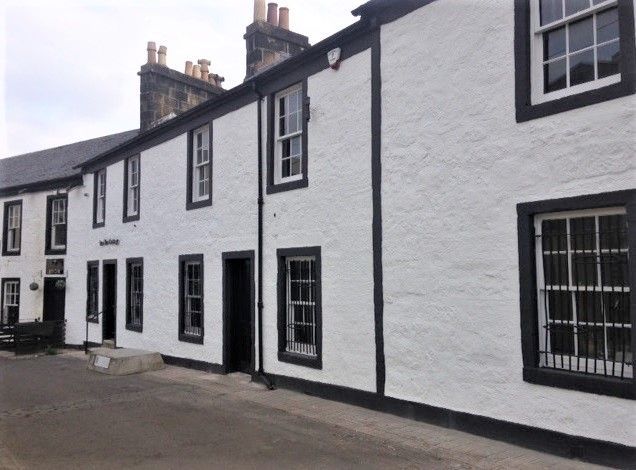
Sma Shot Cottages, History
This cottage is the only survivor of the original shuttle street, which was built from 1735 to the early 1750s, and belongs to the world of the hand loom weavers.
It was built for Kerr and Pollock, a cloth manufacturer of Cork, in the early 1750s. The first direct reference to this Cottage is in a sasine of 1776, when it was one of the many properties bought by another Cork, Andrew Brown, after the failure of Kerr and Pollock, probably due to the collapse of the Bank of Ayr, some three years earlier.
The early history of the Cottage is linked with the Lawson family. David Lawson, and his wife Mary Porter, their son Robert Lawson, with his wife Lydia Lochhead, and Roberts three daughters, and his son Robert junior. David Lawson, journeyman weaver, and master with the incorporation of Old Weavers in Paisley, is the first known tenant, moving here around 1754.
By 10th April 1758 he was in the position to take on an apprentice, John Aird, duly entered by the incorporation. There was no house numbers then, but the occupants of the other cottages on this side are known and the sasine of 1776 names David Lawson and Archibald Munro, Weavers, as the sitting tenants in what is now No. 14 Shuttle Street.
Meanwhile John Aird had been entered journeyman to David Lawson in 1765, and Robert had been apprenticed to his father on 1st November 1774.
In 1797, Robert bought the Cottage from Andrew Brown and Company.he had already bought a property of three steadings including an Inn at the foot of New Street. His parents, David Lawson and Mary Porter continued to live in Shuttle Street with Robert and his wife Lydia.
David Lawson was now described as a school master, his son Robert as a weaver, while his grandson, Robert Junior, made weavers’ reeds, which were on sale at the inn.