Renfrewshire is one of 21 Scottish councils that offer homeowners no grant towards replacing old lead water pipes, a council review has found, as checks get under way at a dozen housing association homes where the pipework can't yet be confirmed as lead-free.
The findings are in a progress report on the council's review of lead piping in public and private housing, which goes before the Audit, Risk and Scrutiny Board on Monday (2 November).
Council homes
The council manages around 12,000 homes, and at least 69% of them were built before 1969, when lead pipes were still common. The report says lead was taken out during modernisation work in the 1990s and a big refurbishment programme between 2010 and 2015, and that the council's water safety policy is to replace any lead pipework found.
Lead tanks and pipes are also meant to be checked and replaced between tenancies, and the council will investigate if a tenant raises a concern. Only one council property failed the Scottish Housing Quality Standard last year because of lead pipework. It's an empty flat the council bought back in a regeneration area, in a block due to be demolished.
The council's housing service told the review no lead pipework had been reported, or needed replacing, in the last five years. The council doesn't routinely test tenants' drinking water, but Scottish Water has now agreed to carry out tests when the housing service asks, after a complaint or once lead pipes have been replaced.
Housing associations
- Linstone Housing Association, which has around 1,572 homes in Bridge of Weir, Johnstone, Linwood and Paisley, reviewed its approach after being contacted by the council. It found 12 homes where records can't confirm the incoming water supply is lead-free, and has asked a contractor to inspect them. Any lead found will be replaced.
- Williamsburgh Housing Association, with around 1,692 homes in Johnstone, Kilbarchan, Paisley and Renfrew, checks a quarter of its homes for lead every year. It has had one tenant complaint in eight years; a water sample found lead, which was traced to Scottish Water's pipe and replaced.
- Bridgewater Housing Association's 870 homes in Erskine were all built after 1971, so lead pipework is highly unlikely.
No grant for homeowners
Help for private owners varies across Scotland. Only three councils (Dundee, Falkirk and Glasgow) have a grant specifically for replacing lead pipes, and seven more offer limited help where a home falls below the basic tolerable standard. Renfrewshire's grants are limited to essential adaptations for disabled people and to owners involved in council-led repair or regeneration schemes, and its advice for homeowners doesn't mention lead pipes at all.
The review was set up partly to look at what non-financial help the council could offer private owners. A final report is due back to the board in January, before going to the full council.
What about health?
NHS public health doctors told the review that when children are found to have high levels of lead in their blood, drinking water is usually considered but is generally not the cause; old paint and soil are more common sources. When a water sample fails for lead, Scottish Water alerts the health board, which contacts the household with advice such as running the tap, using bottled water and replacing the pipes.
If you live in an older home and are worried about lead pipes, Scottish Water can advise on testing your supply.
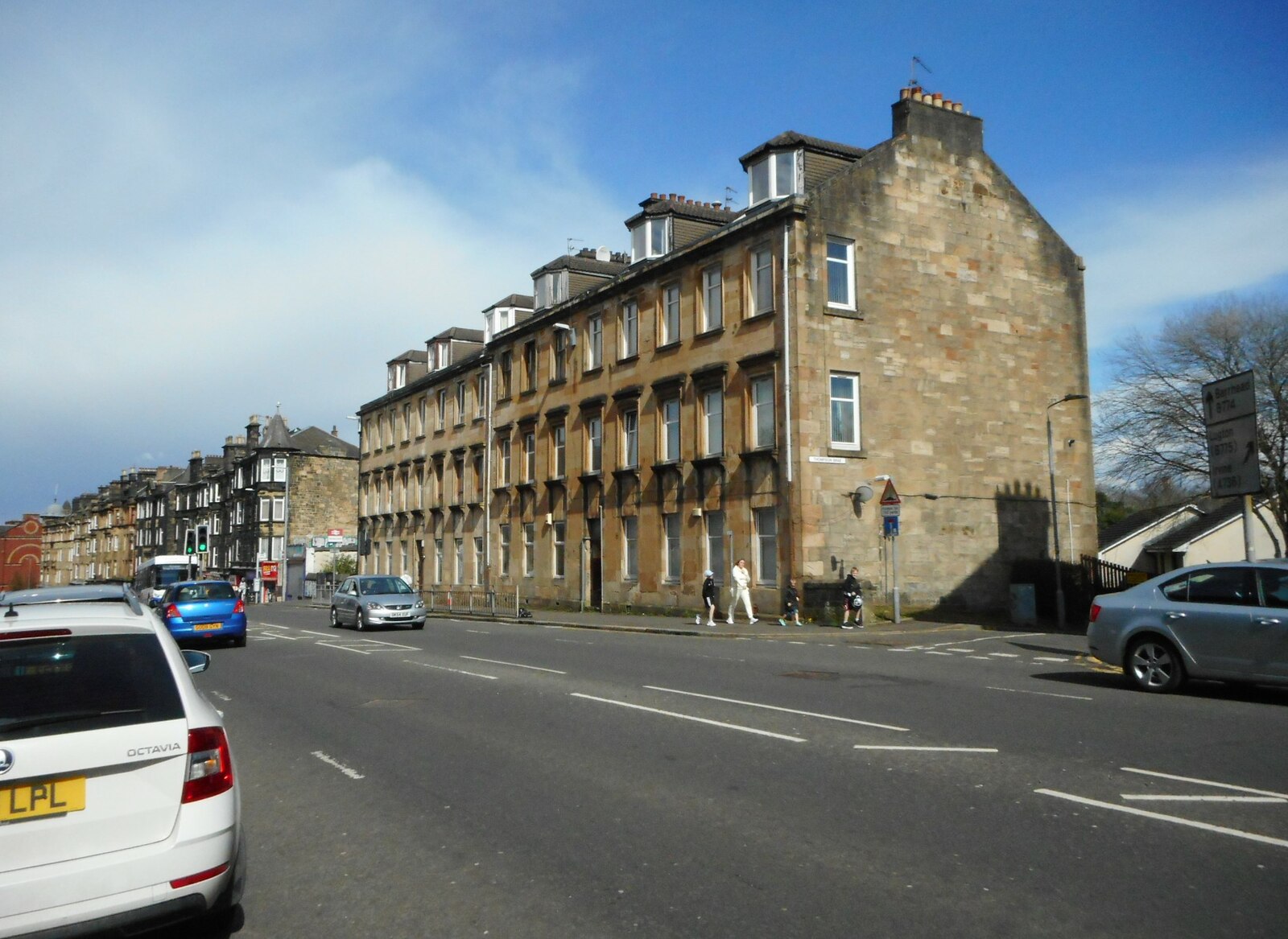
Image: tenements on Causeyside Street, Paisley. Photo: Richard Sutcliffe, CC BY-SA 2.0, via Wikimedia Commons.