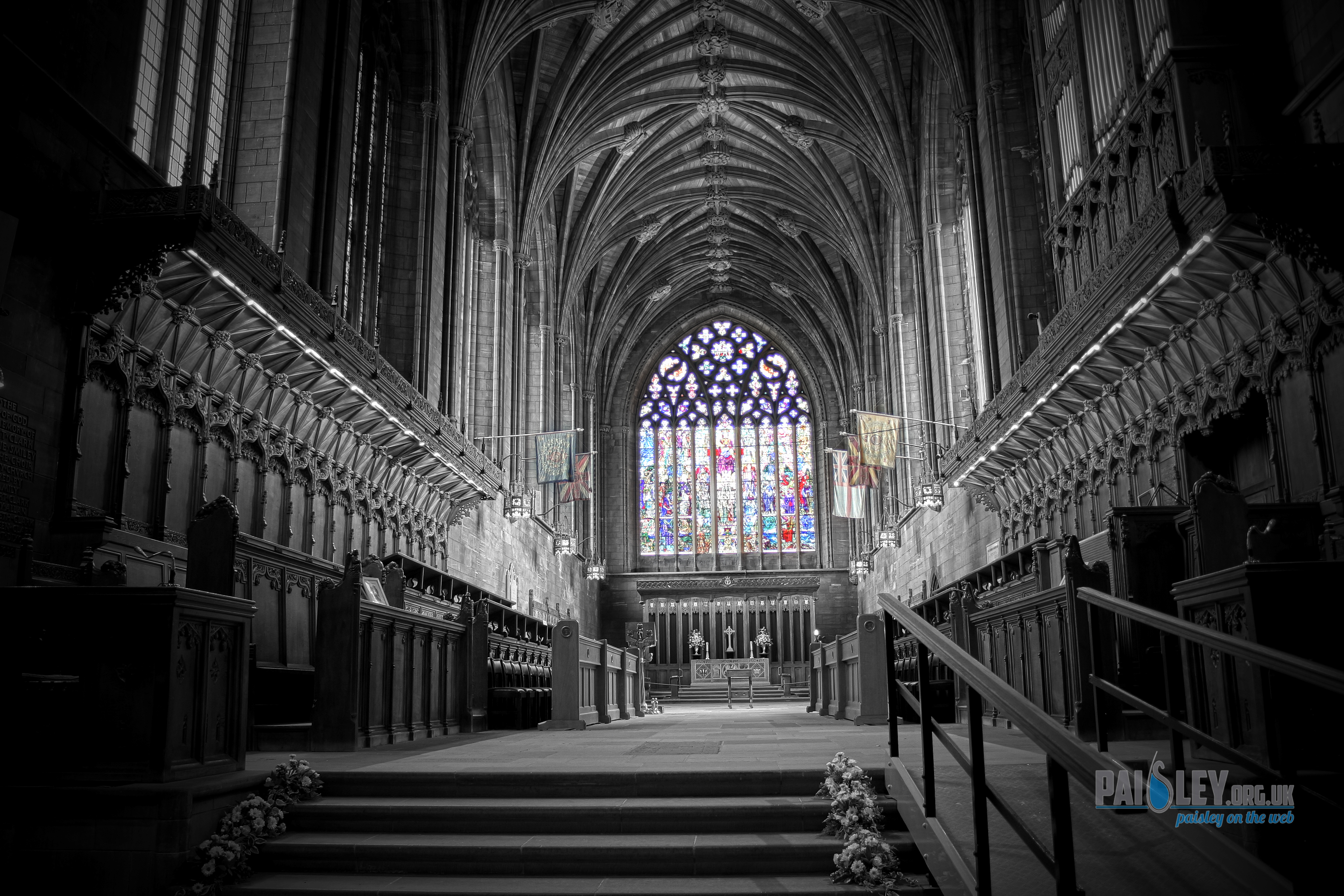
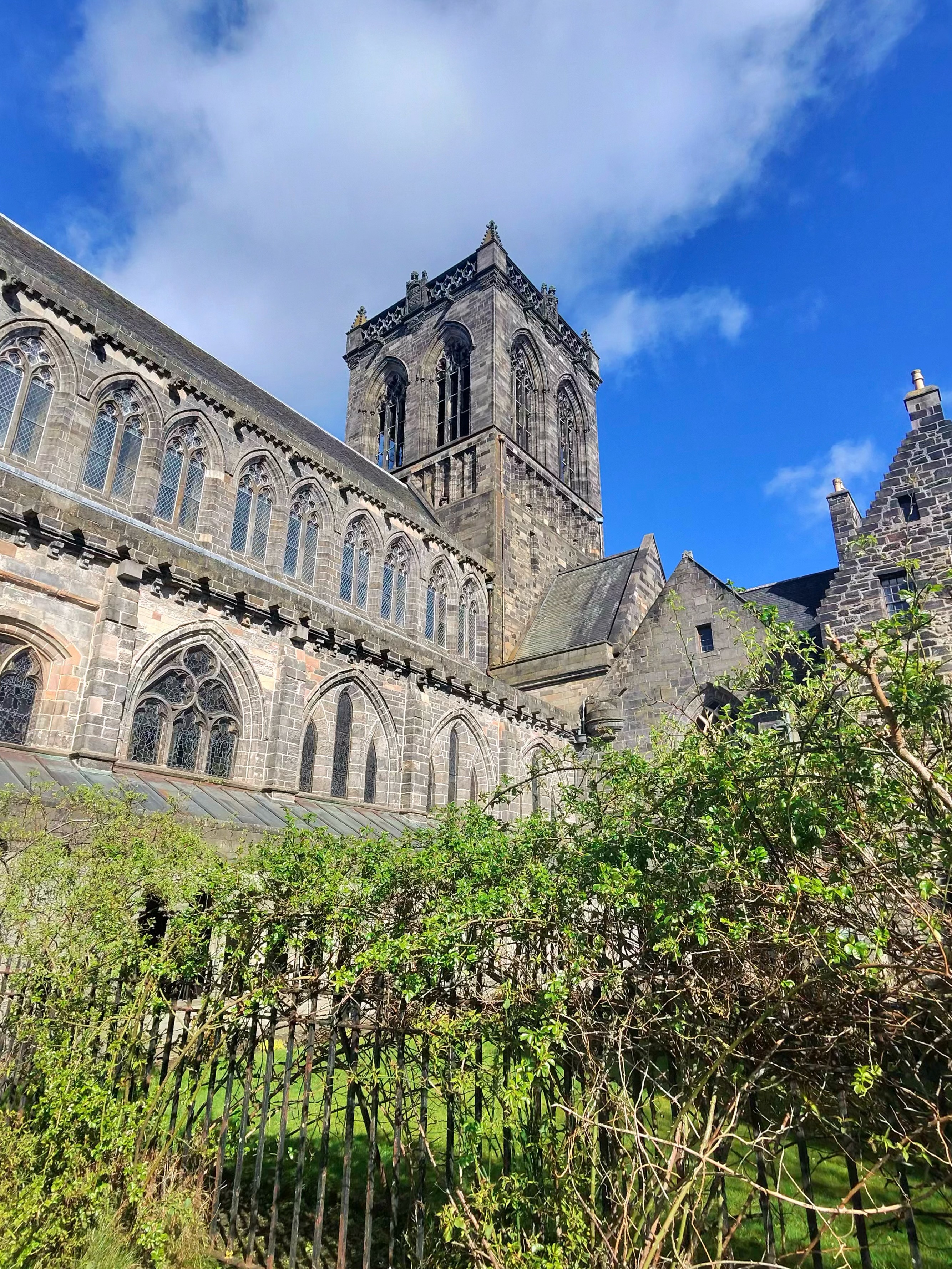
Standing proudly in the heart of Paisley town centre, Paisley Abbey represents more than eight and a half centuries of Scottish history, faith, and community. This magnificent Gothic structure has witnessed the rise and fall of kingdoms, survived reformation and restoration, and continues to serve as a living testament to Renfrewshire's enduring heritage. Whether you're a local resident or a visitor exploring Scotland's largest town, understanding the Abbey's remarkable story offers invaluable insight into the cultural fabric that defines Paisley today.
The Foundation: A Medieval Vision Takes Root in Paisley
The story of Paisley Abbey begins in 1163, when Walter Fitzalan, the first High Steward of Scotland, founded a Cluniac monastery on this sacred site in Renfrewshire. Originally established as a priory, the institution was elevated to abbey status in 1245, marking Paisley's growing importance in medieval Scotland. The Cluniac order, known for their emphasis on elaborate liturgy and beautiful architecture, transformed this corner of Renfrewshire into a centre of religious and cultural life that would influence the region for centuries to come.
The Abbey's location was strategic, positioned along the White Cart Water where ancient pathways converged. This placement allowed the monks to serve travellers, provide hospitality, and extend their influence throughout the surrounding settlements. The monastic community quickly became self-sufficient, managing extensive lands, operating mills, and establishing Paisley as a market town that would eventually grow into Scotland's largest town outside the major cities.
The Royal Connection: Where Scotland's Kings Were Born
Perhaps no aspect of Paisley Abbey's history carries more national significance than its connection to the Stewart dynasty. The Abbey served as the burial place for several members of the High Steward family, whose descendants would ascend to the Scottish throne. Most notably, Marjorie Bruce, daughter of King Robert the Bruce, was laid to rest here after a tragic riding accident in 1316. Her son, born shortly before her death, would become King Robert II—the first Stewart monarch of Scotland.
This royal lineage fundamentally shaped Paisley's identity within Renfrewshire and Scotland as a whole. The Abbey became a pilgrimage site, drawing visitors who came to pay respects to the ancestors of the ruling dynasty. The ornate tomb effigy and memorial still visible within the Abbey serve as powerful reminders of this extraordinary heritage that connects our town to the very foundations of the Scottish monarchy.
Architecture Through the Ages: Building and Rebuilding
The Paisley Abbey we see today represents multiple periods of construction, destruction, and restoration spanning eight centuries. The original 12th-century structure was built in the Romanesque style, featuring the rounded arches and solid stonework characteristic of Norman architecture. As the Abbey grew in wealth and prestige, successive generations of monks expanded the building, incorporating the pointed arches, flying buttresses, and soaring spaces of Gothic design that dominate the current structure.
The nave, completed in the 15th century, showcases some of the finest Gothic architecture in western Scotland. Its triforium and clerestory levels create a sense of vertical movement that draws the eye heavenward, whilst the carefully proportioned arcades demonstrate the mathematical precision medieval builders brought to their sacred work. Walking through these spaces today, visitors to Paisley can still experience the awe these architectural elements were designed to inspire.
The Reformation Crisis and Near-Destruction
The Scottish Reformation of 1560 brought catastrophic change to Paisley Abbey and religious houses throughout Scotland. The monastery was dissolved, its lands seized, and the building itself fell into severe disrepair. For nearly three centuries, portions of the Abbey lay in ruins, with the central tower collapsing in 1553 and the choir and transepts crumbling into dangerous dereliction. Only the nave remained in use as the parish church for the growing town of Paisley.
This period of neglect nearly cost Renfrewshire one of its greatest architectural treasures. However, the continued use of the nave for worship ensured that the building was never completely abandoned, maintaining a thread of continuity that would prove essential for the Abbey's eventual restoration.
Victorian Restoration: Saving a National Treasure
The 19th century brought renewed appreciation for Scotland's medieval heritage, and Paisley Abbey became a priority for preservation. Between 1858 and 1928, extensive restoration work transformed the Abbey from a partial ruin into the complete structure visitors admire today. The architect Dr Macgregor Chalmers led much of this work, carefully studying surviving elements and historical records to recreate the choir, transepts, and crossing tower with archaeological accuracy.
This restoration coincided with Paisley's golden age as a textile manufacturing powerhouse. The wealthy thread manufacturers and mill owners of Renfrewshire provided generous funding for the Abbey's renewal, viewing it as both a spiritual duty and a statement of civic pride. Their patronage ensured that the highest quality craftsmanship and materials were employed, creating work that has endured for over a century.
The restored Abbey reopened fully in 1928, complete with new stained glass windows, restored stonework, and rebuilt vaulting. These Victorian and Edwardian additions blend seamlessly with medieval elements, creating a harmonious whole that honours both the building's ancient origins and its more recent history. Visitors exploring Paisley's historic landmarks consistently rank the Abbey among Scotland's most impressive religious buildings.
Artistic and Cultural Treasures Within
Beyond its architectural significance, Paisley Abbey houses an extraordinary collection of artistic and historical treasures that illuminate eight centuries of Scottish culture. The stained glass windows, installed during various restoration phases, create a luminous narrative of biblical stories and local history. Particularly striking is the St Mirin window, depicting Paisley's patron saint and the area's pre-Abbey Christian heritage.
The carved stone work throughout the building deserves careful attention. Medieval masons left their mark in the form of gargoyles, corbels, and bosses that combine religious symbolism with remarkably naturalistic observations of local flora and fauna. One boss famously depicts what appears to be a dragon or serpent, whilst others show oak leaves, hawthorn, and other plants native to Renfrewshire. These details connect the sacred space to the landscape surrounding Paisley.
The Musical Heritage: Organs and Choirs
Music has played a vital role in Paisley Abbey's life since its foundation. The current organ, built by the renowned firm of Walker and installed during the restoration period, represents one of Scotland's finest instruments. Its rich tones fill the Abbey during regular services and special concerts, continuing a tradition of sacred music that stretches back to Cluniac chant in the medieval monastery.
The Abbey choir maintains high musical standards, performing works ranging from Renaissance polyphony to contemporary compositions. Their concerts and recordings have brought Paisley's musical heritage to audiences far beyond Renfrewshire, whilst weekly services offer local residents the opportunity to experience choral music in its intended architectural setting. Those interested in Paisley's cultural offerings can find upcoming musical events throughout the year.
Archaeological Discoveries: Unearthing the Past
Excavations around Paisley Abbey have yielded fascinating insights into medieval life in Renfrewshire. Archaeological work in the 1990s uncovered the chapter house, refectory, and cloisters of the original monastery, revealing the daily rhythms of monastic life. Discoveries included pottery fragments, tools, and even remnants of the medieval drainage system, demonstrating the sophisticated infrastructure the monks developed.
Perhaps most poignantly, excavations have located numerous burials, including those of prominent Paisley families from various historical periods. These finds provide invaluable data about health, diet, and living conditions across the centuries. The archaeological record confirms what historical documents suggest: that the Abbey served as the spiritual and social heart of Paisley from its foundation through to the present day.
Recent archaeological techniques, including ground-penetrating radar, suggest further discoveries await beneath the Abbey grounds and surrounding areas of Paisley town centre. Each finding adds another piece to the complex puzzle of how this Renfrewshire community developed around its great Abbey church.
The Abbey in Community Life Today
Far from being merely a historical monument, Paisley Abbey remains a vibrant centre of worship and community activity. Regular Church of Scotland services welcome congregations who continue traditions of Christian worship stretching back 850 years. The Abbey opens its doors for baptisms, weddings, and funerals, marking the significant moments in Paisley families' lives just as it has for countless generations.
The building also serves broader cultural functions. Concerts, lectures, exhibitions, and community events make the Abbey accessible to all Renfrewshire residents, regardless of religious affiliation. This inclusive approach reflects the Abbey's historical role as a gathering place and centre of learning. The partnerships with Paisley Museum and other local institutions ensure that the Abbey's historical treasures receive proper interpretation and conservation.
Guided tours offer both visitors and local residents the opportunity to explore areas normally closed to the public, including the triforium level and the organ loft. These tours, led by knowledgeable volunteers, bring the Abbey's history to life through stories, architectural details, and insights into ongoing conservation work. Educational programmes for Renfrewshire schools ensure that younger generations understand and value this irreplaceable heritage.
Conservation Challenges and Future Planning
Maintaining an 850-year-old building presents constant challenges. Stone decay, water infiltration, and structural movement require ongoing monitoring and intervention. A dedicated team of conservation professionals works tirelessly to balance preservation needs with the building's continued use as an active church. Recent projects have addressed roof repairs, stonework stabilisation, and improved heating systems that protect both the fabric and the comfort of worshippers.
Funding these conservation efforts requires support from multiple sources, including the congregation, heritage grants, and donations from those who value Paisley's architectural legacy. The Abbey's status as a Category A listed building provides some protection and access to specialist expertise, but the responsibility for stewardship ultimately rests with the local community in Paisley and across Renfrewshire.
Paisley Abbey's Place in Scotland's Story
When considering Scotland's great historic buildings, Paisley Abbey deserves recognition alongside Edinburgh's St Giles' Cathedral, Glasgow Cathedral, and the ruined abbeys of the Borders. Its continuous use for worship, its royal connections, and its architectural significance combine to create a site of truly national importance. Yet it remains deeply rooted in the local community, shaping Paisley's identity and serving as a symbol of Renfrewshire's cultural wealth.
The Abbey's influence extends beyond religion and architecture. It inspired the development of the town around it, attracted craftspeople and merchants, and helped establish Paisley as a centre of learning and culture. The famous Paisley Pattern, which brought worldwide recognition to the town's textile industry, echoes in its curved forms the organic motifs found in the Abbey's medieval stonework—a tangible connection between ancient craft traditions and industrial innovation.
For those exploring Paisley's historic attractions, the Abbey provides an essential starting point. Understanding its history illuminates the development of the High Street, the establishment of the burgh, and the growth of institutions like the Paisley Museum. The Abbey literally and figuratively anchors the town, its tower visible from throughout the surrounding area, a constant reminder of continuity amid change.
Final Thoughts
Paisley Abbey's 850 years encompass triumph and tragedy, creation and destruction, devotion and controversy. This magnificent building has survived reformation, revolution, and the mere passage of time to remain a living, breathing part of Paisley and Renfrewshire life. Whether you appreciate it for its architectural beauty, its historical significance, its spiritual atmosphere, or its role in community life, the Abbey offers something profound to everyone who enters its doors. We encourage you to visit, explore, and discover your own connection to this extraordinary heritage. What aspect of Paisley Abbey's history resonates most with you? Share your thoughts and experiences with fellow residents and visitors to our remarkable town.