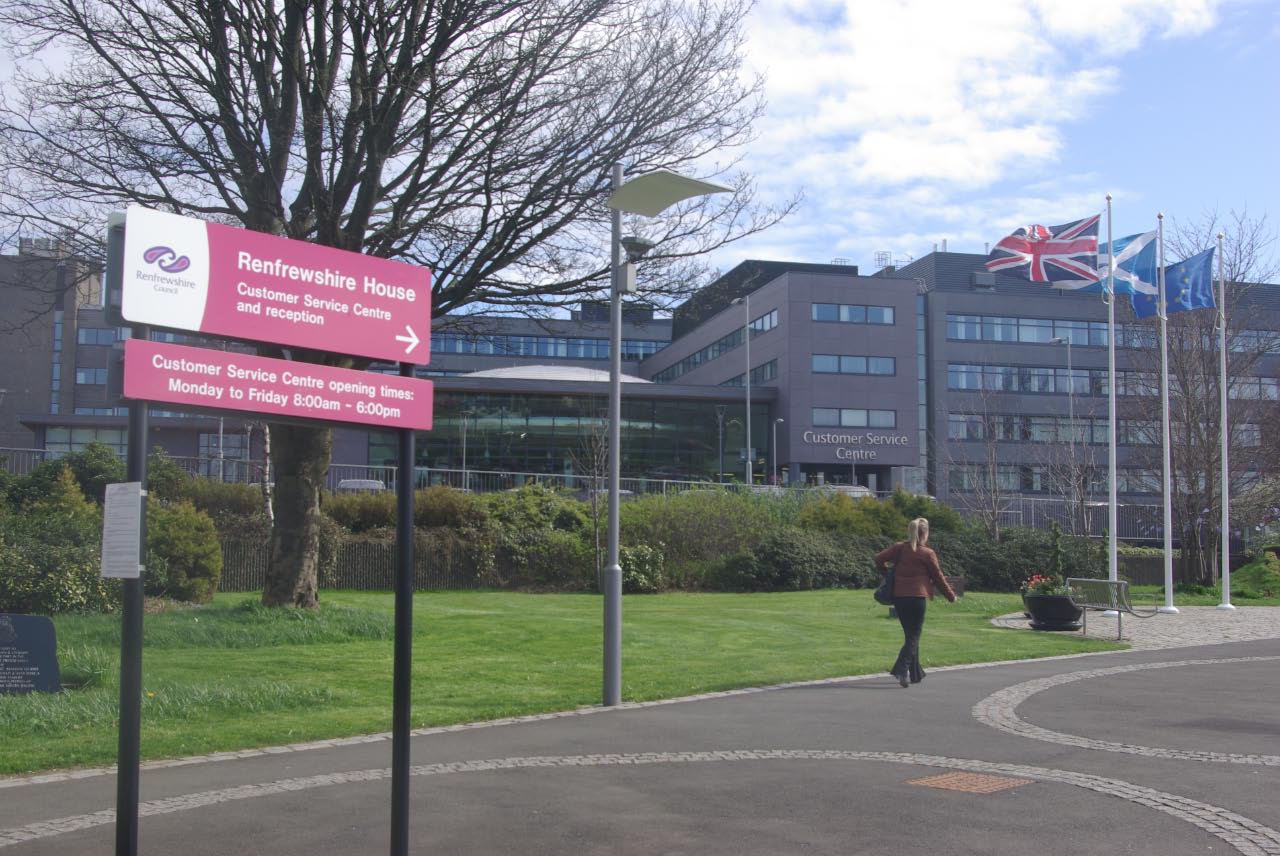
Renfrewshire Council has agreed to write off £339,122.66 that it is owed in unpaid council tax, non-domestic (business) rates and other debts, after officers concluded the money could no longer realistically be recovered.
The decision was taken at a meeting of the council's Finance, Resources and Customer Services Policy Board on Thursday 10 September 2026.
How the Total Breaks Down
Council tax: £157,663.14, owed by 11 debtors
Non-domestic rates: £156,976.36, owed by seven companies that have since been dissolved
Housing benefit overpayments: £7,675.82
Other council debt: £16,807.34
Within the council tax figure, £94,722.24 is covered by trust deeds, £23,537.69 was owed by a dissolved company and £21,967.50 is linked to sequestrations. A further £17,385.71 was owed by a person who has since died. Some of the council tax accounts date back as far as 2003/04.
Businesses Named in the Report
Retail Flooring UK Limited owed £38,440.02 in business rates. Renfrew Fine Dining Ltd, which ran The Punjab Times on Hairst Street in Renfrew, owed £34,830.38.
In Paisley, Brantano UK Ltd owed £22,810.36 for its former shop at Phoenix Retail Park, while Daria-E-Noor Ltd owed £21,870.95 for premises on New Sneddon Street.
The remaining business rate debts involved Online Media Branding Limited, NB9020 Limited and Paperpleasantries Limited.
Councillors' Questions
Councillor Alison Ann-Dowling asked whether every insolvency and tracing option had been tried, and whether the council would have the resources to resume recovery if a debtor's situation changed. Officers said that could happen if new information came to light, but that such cases were rare, and that resources were better spent collecting debts before they reached the write-off stage.
Councillor James MacLaren asked why protected trust deeds stopped the council from recovering almost £95,000 of unpaid council tax. Officers explained that a protected trust deed is a formal insolvency arrangement. Once it is protected, the council can no longer pursue the debt, and any balance left unpaid at the end has to be written off.
The Brantano Debt and "Phoenixing"
Councillor Chris Gilmour raised the Brantano debt, questioning why it had taken around ten years to come before the board. He pointed out that the company had issued a note to creditors in 2016, had been referred to under a slightly different name in 2017, and had issued another note to creditors that same year.
He also asked officers to explain the practice known as business "phoenixing", while making clear he was not suggesting Brantano had done this. "I am not saying that this particular company did it, but I am just highlighting it," he said.
Mark Conaghan, the council's Head of Corporate Governance, told members that a company's registered number matters more than its trading name when identifying a business. "If it is a different company number, it is not the same company," he said.
He described phoenixing as the owners of a business winding it up and then starting it again from the same premises, with effectively the same people in charge, as a way of avoiding debt. He said this can legally happen and is "very difficult to deal with".
Officers confirmed that the council had lodged a claim during Brantano's administration and received a dividend, although this did not cover the full amount owed.
What Happens Next
The council said extensive efforts had been made to trace the debtors and recover the money, and the write-offs were only recommended once recovery was no longer considered viable. The sums will be met from the council's existing provision for bad debts.
The accounts will continue to be monitored, and recovery action may be restarted if a debtor's circumstances change.
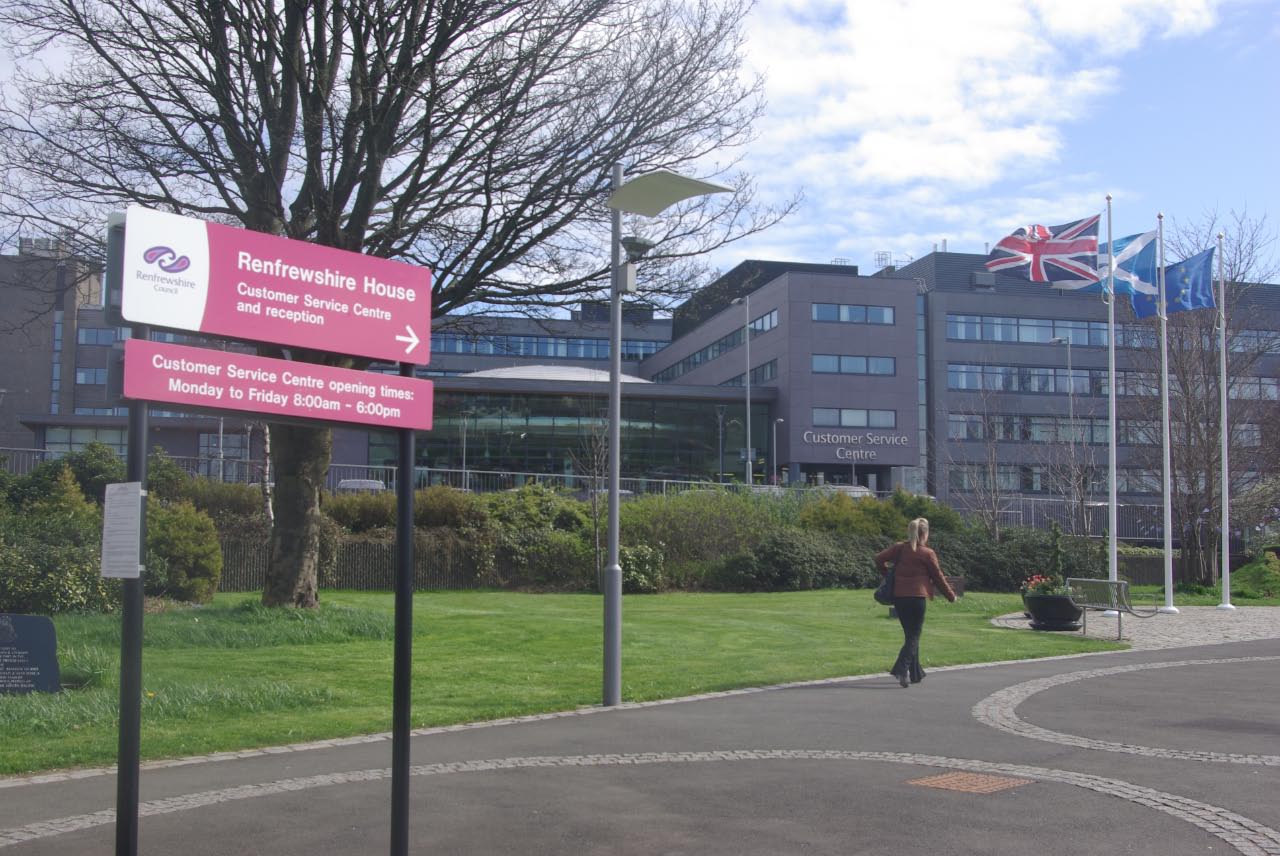
Featured image: Renfrewshire House, home of Renfrewshire Council, in Paisley. Photo by Stephen McKay, CC BY-SA 2.0, via Wikimedia Commons
