‘…always listen to your body and trust your instincts. If something doesn’t feel right, seek help and don’t ever worry about “wasting anyone’s time”. No question is a silly one when it comes to your health. You know your body better than anyone else and acting quickly can save lives.’
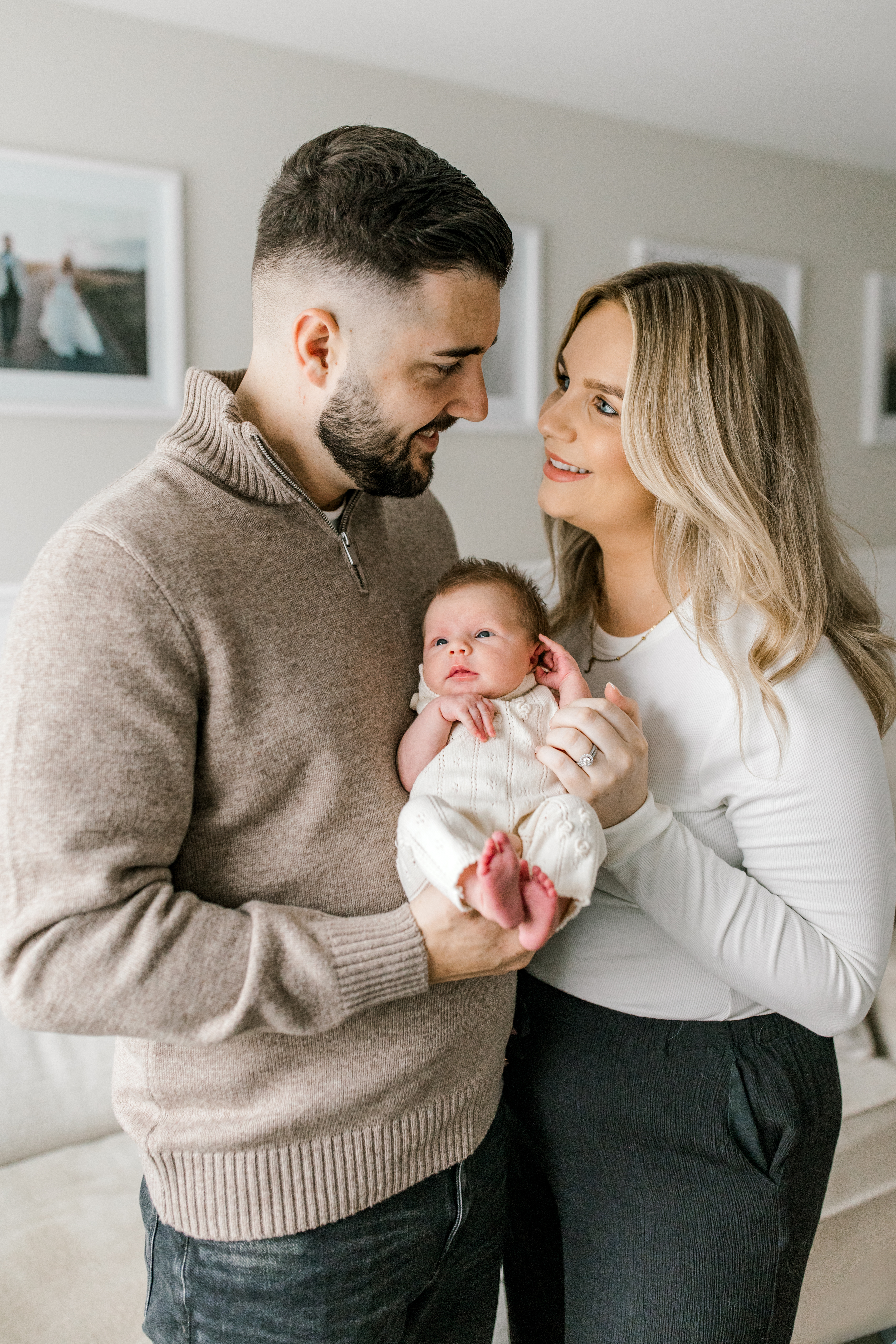
32 year old construction marketing manager Jenna’s world outside work now understandably revolves around her baby girl Mollie. Her golden retriever, Oscar, also keeps the family busy. ‘I love going for long walks, spending time with my friends and family and enjoying good food together’, she says, ‘Those simple moments mean even more to me now.’
Jenna very kindly shares her story here.
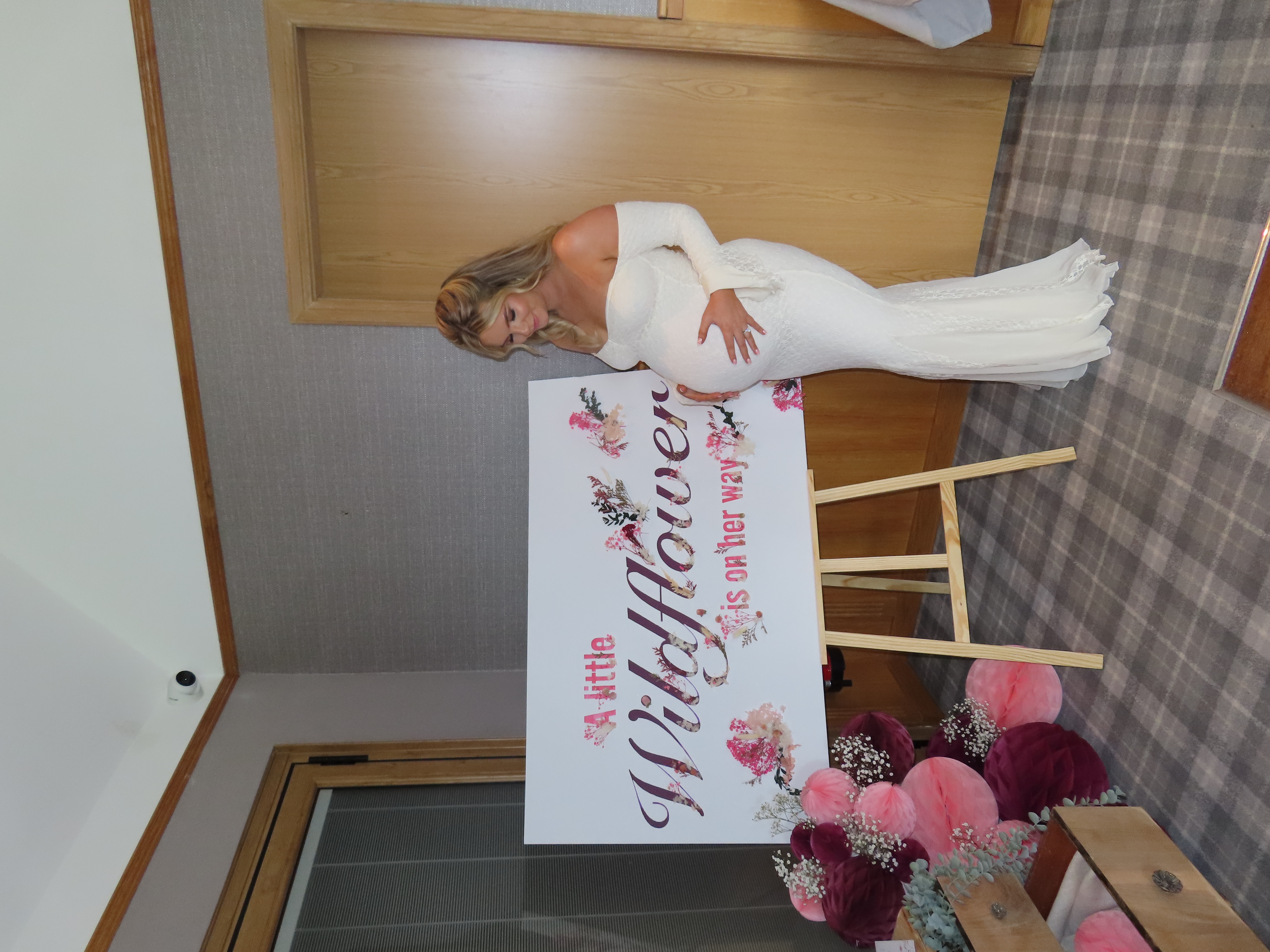
I had my baby shower on Saturday 20th September 2025. At that point I was 35 weeks and 4 days pregnant. It was such a special day, organised by my husband of two years Pete, my family and my best friends – they made me feel incredibly loved and excited for Mollie’s arrival.
The next day I felt quite wiped out, which I put down to the busy weekend, so I went for a lie down. Not long after that I started getting pain across my whole stomach which gradually became more severe and moved into my right side. I phoned triage at the Royal Alexandra Maternity Hospital and they asked me to come in to be checked. This was around 11pm on the Sunday night.
When I arrived, my heart rate and blood pressure were high and my stomach was extremely tender to touch, so they decided to keep me in for monitoring. By the time I was seen and moved to a ward it was around 3am and unfortunately Pete had to go home and then come back again in the morning.
I managed a little breakfast the next day, but by lunchtime things started to deteriorate very quickly. I began shaking and convulsing in the bed in a way I had never experienced before and I was violently sick. I remember being really alarmed by the colour of the vomit, which was green, and I could hear the nurses discussing it.
At this point I was in a ward with three other women who were there for inductions. Throughout this time I had the monitor on my stomach tracking Mollie’s heart rate and movements. I started to become really worried because my heart rate was reaching 160 and Mollie’s was also very high. I hadn’t felt her move for hours, which was very unusual as she had always been an active baby.
Doctors started arriving quickly and ran tests, including an ECG. They told me that all my symptoms were pointing towards sepsis and that they believed the source was my appendix. When I heard the word sepsis my heart just sank. I was terrified – not only for myself but for Mollie.
The only thing that kept me calm in those moments was seeing her heartbeat on the monitor, with my mum and Pete reassuring me that she was still there and still fighting. The doctors explained that I would need a CT scan to confirm whether it was my appendix that had become infected before they could decide the next steps. The CT scan confirmed that the infection that led to sepsis had originated in my appendix and that it was very close to rupturing. Antibiotics alone wouldn’t be enough.
I had already been started on antibiotics through cannulas in both arms to begin treating the infection. At around 5–6pm the doctors explained that I would need surgery to remove my appendix and flush the infection from my pelvis and surrounding areas.
However, because of where my appendix was positioned during pregnancy, they explained that Mollie would need to be delivered first. I was told I would need a caesarean section, followed immediately by the appendix surgery, all under general anaesthetic.
There were then two surgical teams involved – one for the caesarean section and one for the appendix removal.
I was understandably terrified going into surgery because I didn’t know what would happen afterwards. Not only was I suddenly facing emergency surgery, but I realised I wouldn’t have the birth I had imagined. I wouldn’t get to see Mollie’s little face when she arrived because I would be under general anaesthetic. At that moment, though, I knew I had no choice but to trust the medical team around me. I was in a lot of pain and I just wanted Mollie to be safe.
What scared me the most was that I hadn’t felt her move for around eight hours. I remember lying there worrying about whether I would wake up to meet my baby – or whether I would even wake up myself.
I had been healthy all my life, so everything felt surreal and overwhelming. I knew that if my appendix ruptured things could escalate very quickly and lead to septic shock, so I also knew the doctors had to act fast.
The pain was the worst I have ever experienced and because Mollie was in distress the pain relief they could give me was limited, so I just had to breathe through it and focus on getting through the surgery.
My mum and my husband Pete were both with me in hospital. I know they were incredibly worried but they stayed so calm for me, which helped more than they’ll ever know. Our families at home were also extremely worried. Mollie was going to be the first grandchild on both sides of the family, so everyone was anxiously waiting for news of the two of us.
Mollie was born at 9:47pm on the 22nd September, but I didn’t get to meet her until 11am the next morning.
Once I came out of surgery I was on three different types of antibiotics, injections to prevent blood clots and strong pain relief. My surgical wound ran vertically from just below my belly button down towards my pant line. I also had the caesarean section scar internally. The first time I saw the vertical scar it really broke my heart as it brought back so much of the trauma of what had happened.
Those hours between coming round and meeting Mollie were some of the longest of my life. I had spent months imagining the moment I would finally meet my baby girl, holding her for the first time, seeing her little face, counting her fingers and toes. Instead, I woke up from surgery without her there and had to wait through the night not knowing when I would get to see her.
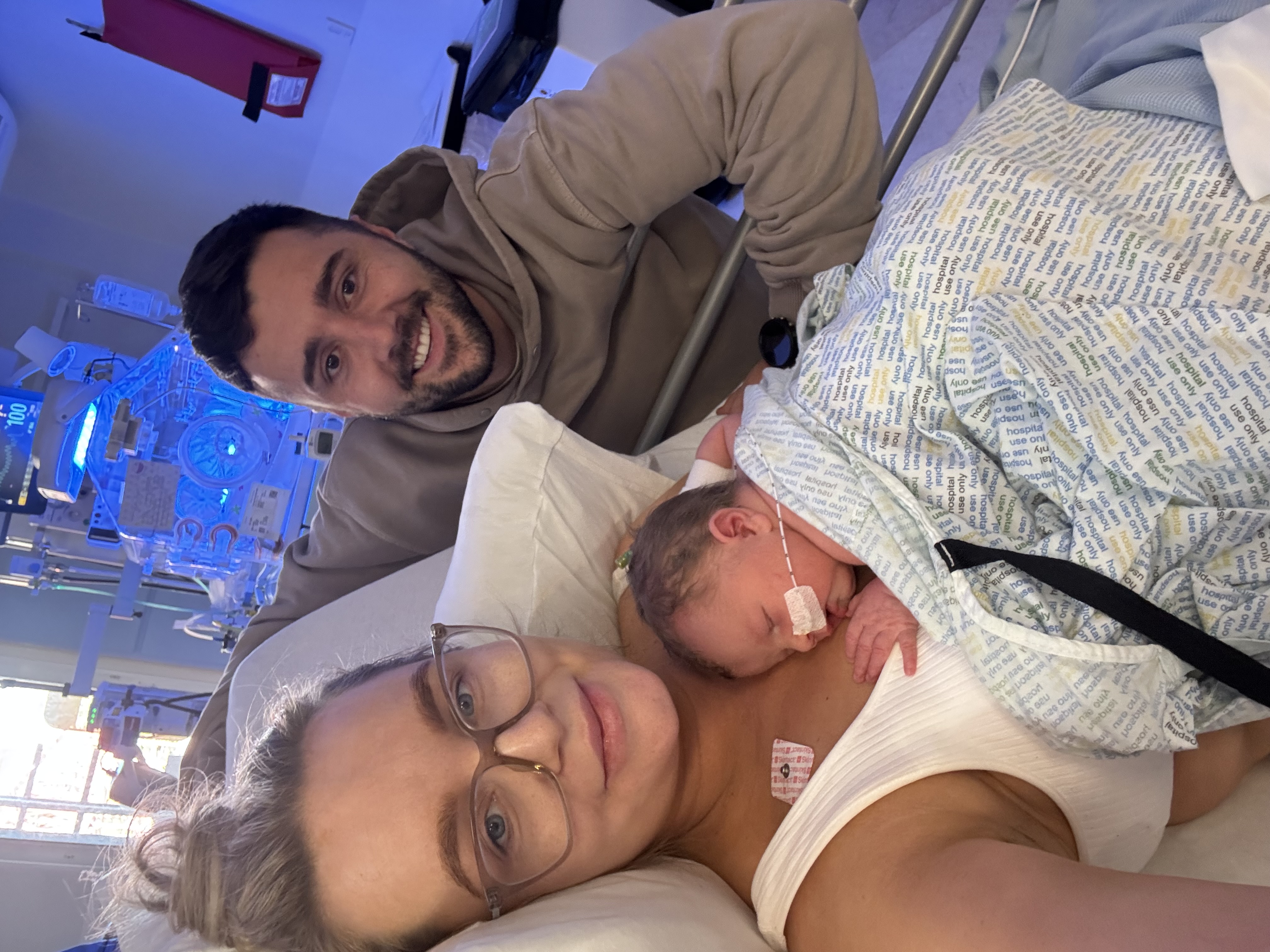
My oxygen levels needed to stabilise and Mollie had to be taken to NICU, as the sepsis had unfortunately affected her slightly, so we were kept apart. I knew she was being cared for and was in the safest place possible, but it was incredibly hard knowing my tiny newborn baby was somewhere else and I couldn’t be with her.
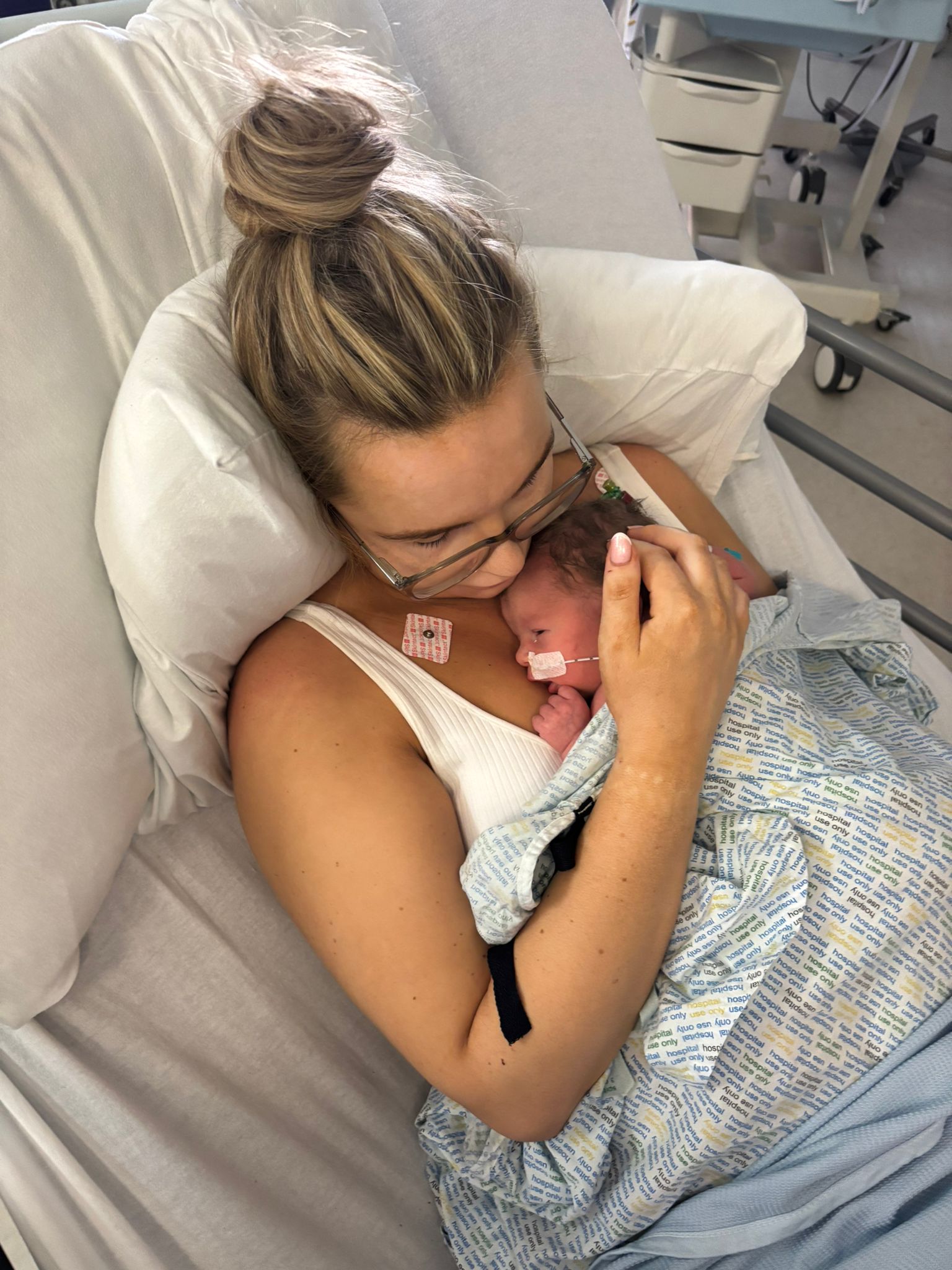
When I finally met her the next morning, it was overwhelming. She was so tiny and perfect and I just remember feeling such a mixture of relief, love and sadness for everything we had both just been through.
The days that followed were really emotional for me. I missed some of the moments you dream about as a new mum – I didn’t get to hold her straight away, I didn’t get to change her first nappy or dress her in her first babygrow, and we didn’t get that immediate skin-to-skin time after she was born.
Because I was so unwell, it also took longer for us to establish feeding. Mollie needed donor milk in the first few days as my milk was delayed, which was yet another reminder of how poorly I had been.
Becoming a mum while recovering from major surgery and sepsis was incredibly hard. I wanted to give her everything straight away, but physically I just couldn’t, and that was something I really struggled with emotionally.
When my milk did finally come in and I was able to breastfeed her, it meant the world to me. It felt like one thing I could do for her after everything we had been through together, and it helped me begin to rebuild that bond.
Unfortunately, I was in and out of hospital for around three weeks after the birth as my wound became infected. Because the incision was vertical I had to use those muscles every time I lifted Mollie, fed her or moved around, which meant the wound kept opening and weeping. Despite the pain I still had to care for a newborn, so it was a very challenging time. Unfortunately, most of Pete’s paternity leave ended up being spent taking us back and forward to hospital appointments.
The team at the Royal Alexandra Maternity Hospital in Paisley truly saved our lives. I will never be able to thank them enough. Even during the most frightening moments they made me feel safe and cared for.
I’ve subsequently been receiving postnatal trauma support through the NHS for my mental health and it has helped enormously. The psychologist working with me has been incredibly patient and kind. That will likely continue for another couple of months.
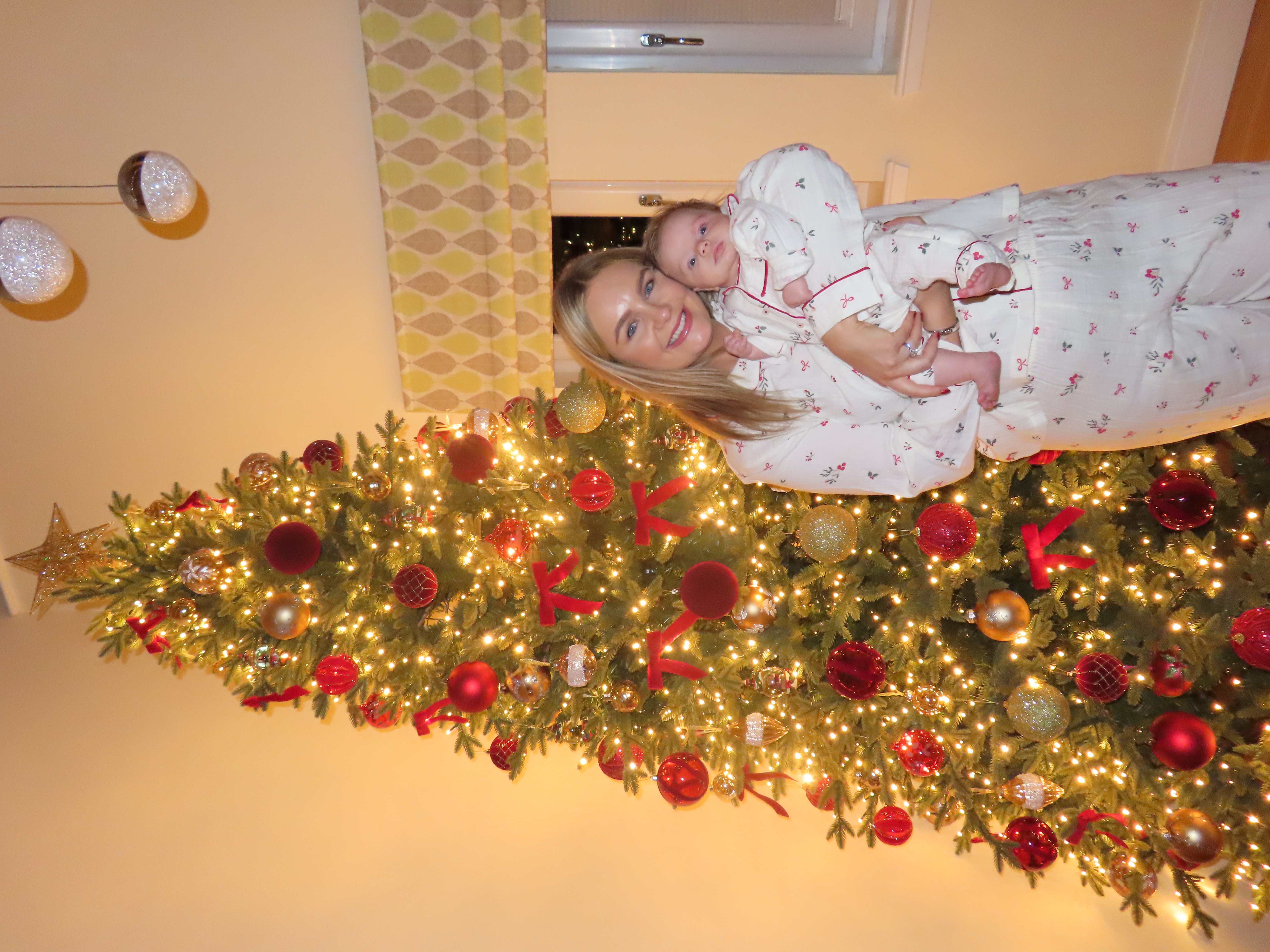
It was my support network that made all the difference to me. Friends and family rallied around us in ways I will never forget – cooking meals, walking our dog, bringing tiny baby clothes, fresh pyjamas, giving me time to nap and sending messages, flowers and gifts. Those gestures meant everything during such a difficult time. And my husband Pete was incredible. We had just become new parents and he had to watch his wife go through something so frightening, but he stepped into fatherhood so naturally and supported both of us through it all. He had to take on many of Mollie’s first moments because I was so unwell, and he never once complained. He was my absolute rock.
Looking back, I know how lucky we were.
I was fortunate that the appendicitis happened late in pregnancy and that it was caught before the appendix ruptured fully. I’ve since been told that if treatment had been delayed any longer it could have been fatal for both of us.
The experience has changed how I view my health. I will always listen to my body and advocate for myself if something doesn’t feel right.
Just recently I had symptoms that reminded me of that time – a high temperature, shaking and sickness – and I immediately contacted NHS 111 and was admitted to hospital. Thankfully it turned out to be a viral infection, but the experience reinforced how important it is to act quickly when something doesn’t feel right.
Coincidentally, I had heard about Sepsis Research FEAT before because my cousin Orla is also a sepsis survivor, whose sepsis originally developed due to appendicitis. Orla shared her story with the charity as part of its first ever Student Sepsis Awareness campaign less than a month before I became ill myself and I’m very proud of her.
Reading the resources and other people’s stories on the charity’s website has been incredibly helpful. People really are warriors and what they’ve come through is so inspirational.
Sharing my own story is part of my healing, but I also hope it helps raise awareness.
I know my case was rare – the hospital staff even told me they had never seen anything quite like it before – but sepsis can develop incredibly quickly and recognising the signs early can save lives.
My biggest message would be to always listen to your body and trust your instincts. If something doesn’t feel right, seek help and don’t ever worry about “wasting anyone’s time”. No question is a silly one when it comes to your health. You know your body better than anyone else and acting quickly can save lives.
But I would also say don’t be afraid to ask for help or to lean on the people around you. Becoming a mum while recovering from something so serious was incredibly hard and I wouldn’t have got through it without the support of my family and friends. Let people show up for you. Let them cook a meal, hold the baby while you rest, walk the dog or simply sit with you when things feel overwhelming. You don’t have to go through something like this alone.
Sepsis can escalate incredibly quickly. Recognising the signs and getting help early can make all the difference.
Charity comment:
Jenna’s story of the circumstances surrounding the birth of her daughter Mollie is heartbreaking.
Nothing played out as Jenna had hoped and she became desperately unwell. It was a terrifying moment in her life, which had a significant and frightening impact not just on Mollie’s birth but on Jenna’s health and the first few days and weeks of her experience of motherhood.
Jenna’s message to others in a similar position is to trust your instincts and not to be afraid to ask for help if something doesn’t feel right as an expectant or new mum. Her observation that ‘No question is a silly one when it comes to your health’ is spot-on.
Sepsis Research FEAT is very grateful to Jenna for sharing her story so bravely and poignantly, to help raise awareness of maternal sepsis and improve outcomes for others in the future. We wish Jenna, Pete and Mollie all the very best for the future.