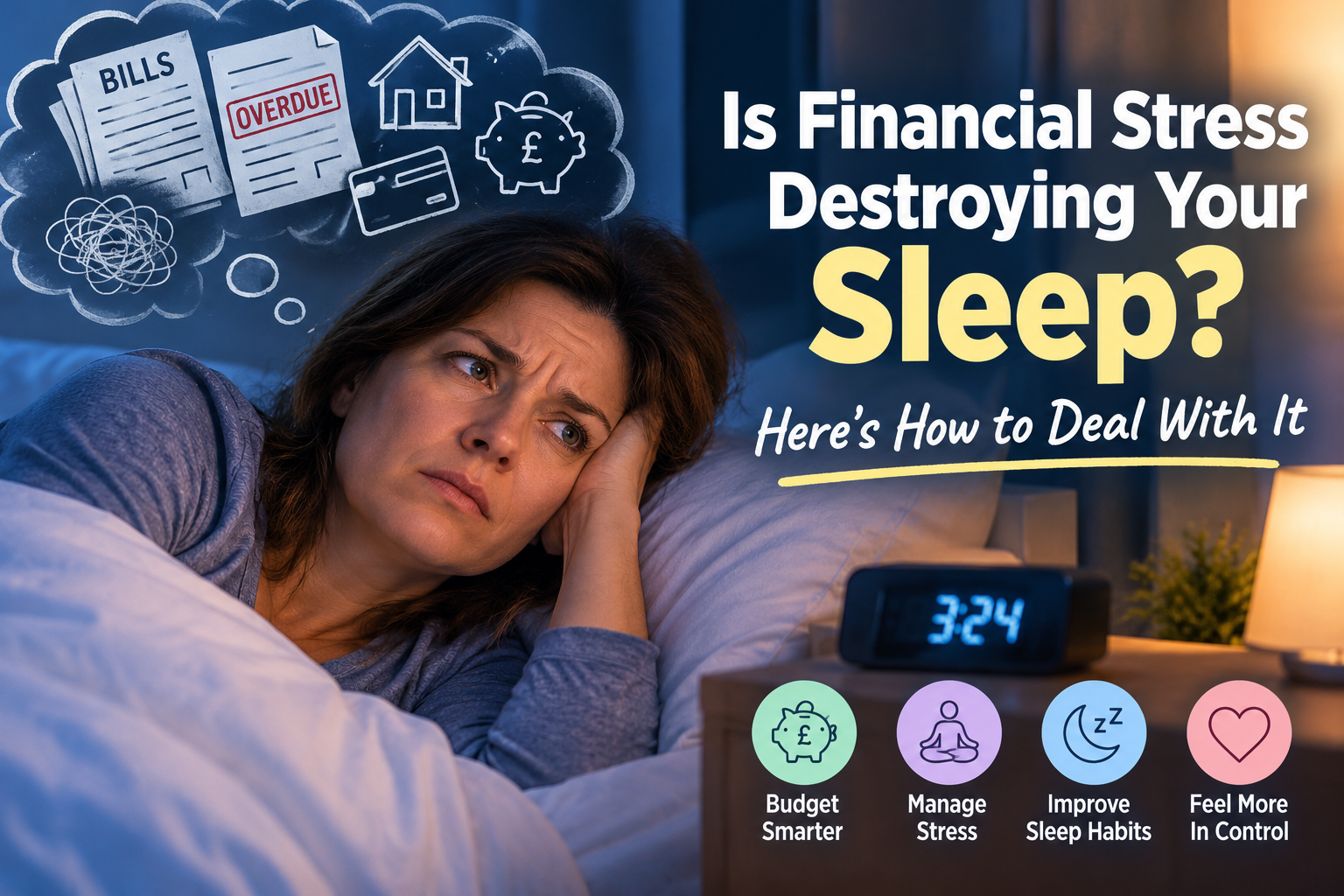
You've been there. It's 2am, you're wide awake, and your brain won't stop doing maths. According to the Mental Health Foundation, nearly one in three adults in the UK say money worries have made their sleep worse. It’s also been found that people lose about five nights of sleep every single month to financial stress. Five nights is a lot. That kind of disruption leaves you exhausted the next morning, but it also erodes your mood, concentration, physical health and even your relationships over time.
Most people treat this as two separate problems, the money and the sleep, when they're actually tangled up together. But once you understand what's actually happening in your body at 2am, and take a few steps on both the money and the sleep, that cycle can break faster than you'd expect.
Why Money Worries Hit Hardest at Night
Your brain stays occupied during the day. There's work to do, people to talk to, errands to run. None of that exists at midnight. When the distractions drop away and you're lying in the dark, your mind grabs hold of whatever feels most unresolved, and for millions of people, that's money.
Here's the biological bit. Financial stress triggers cortisol, the hormone your body releases when it senses danger. Your brain can't tell the difference between a genuine physical threat and an unpaid bill sitting on the kitchen table, so cortisol stays high and your nervous system won't calm down. Left unchecked over weeks and months, this becomes self-reinforcing. Poor sleep increases anxiety, which clouds your judgement around money, which gives your brain even more to panic about when the lights go off.
Get the Money Side Under Control First
Ignoring the problem won't fix your sleep. If debt or uncertainty about retirement is what keeps you staring at the ceiling, the single most useful thing you can do is address the finances head-on.
Start with something small. Write down every debt you have and every pound coming in, because just seeing it on paper takes away some of the dread that comes from not knowing. Set up a basic budget and automate your savings, even if it's only £50 a month. You don't need to solve everything in a week. The point is to swap that foggy, 2am panic for an actual plan you can look at in daylight.
Bigger questions, like retirement planning or long-term wealth building, are harder to solve on your own. So outsource all that stress and uncertainty and get help from someone who already knows what to do. Working with a UK wealth manager can take a huge weight off your shoulders there. Someone qualified maps out a strategy around your specific situation, which means you're not lying awake trying to piece it all together yourself. That handoff alone, knowing a professional has it covered, can make a real difference to how well you sleep.
Break the Anxiety-Insomnia Cycle Before Bed
Even once you've started tackling the money side, your body might still be wired for panic at bedtime. Old patterns take time to fade.
One trick that helps is a "worry window." Pick a time after dinner, maybe 7pm, and give yourself 15 minutes to scribble down everything on your mind. Financial stuff, personal stuff, work stuff, all of it. Once it's out of your head and onto paper, your brain is far less likely to replay it all at midnight. Keep your bedroom cool, dark and screen-free for at least half an hour before you get in, and if you do wake up with racing thoughts, don't lie there battling them. Get up, sit somewhere else, and only go back to bed when you actually feel drowsy.
Don't Wait Until You're Running on Empty
The irony is that most people wait until they're completely burned out before they do anything about either problem. They'll push through months of bad sleep, let the anxiety build, and only deal with the money when something forces their hand. By that point, you're making financial decisions while exhausted and emotionally drained, which is about the worst state you can be in for anything involving numbers.
Flip that order. Sort the money first, even roughly, even imperfectly, and the sleep tends to follow. It won't happen overnight, but the difference between lying awake with a vague sense of dread and lying awake knowing there's a plan in place is bigger than most people expect. Your brain doesn't need everything solved. It just needs to believe you're handling it.
Note: The value of investments and any income they produce can fall as well as rise. You may receive back less than the amount you originally invested. How investments have performed in the past isn't a reliable guide to how they'll perform in the future.