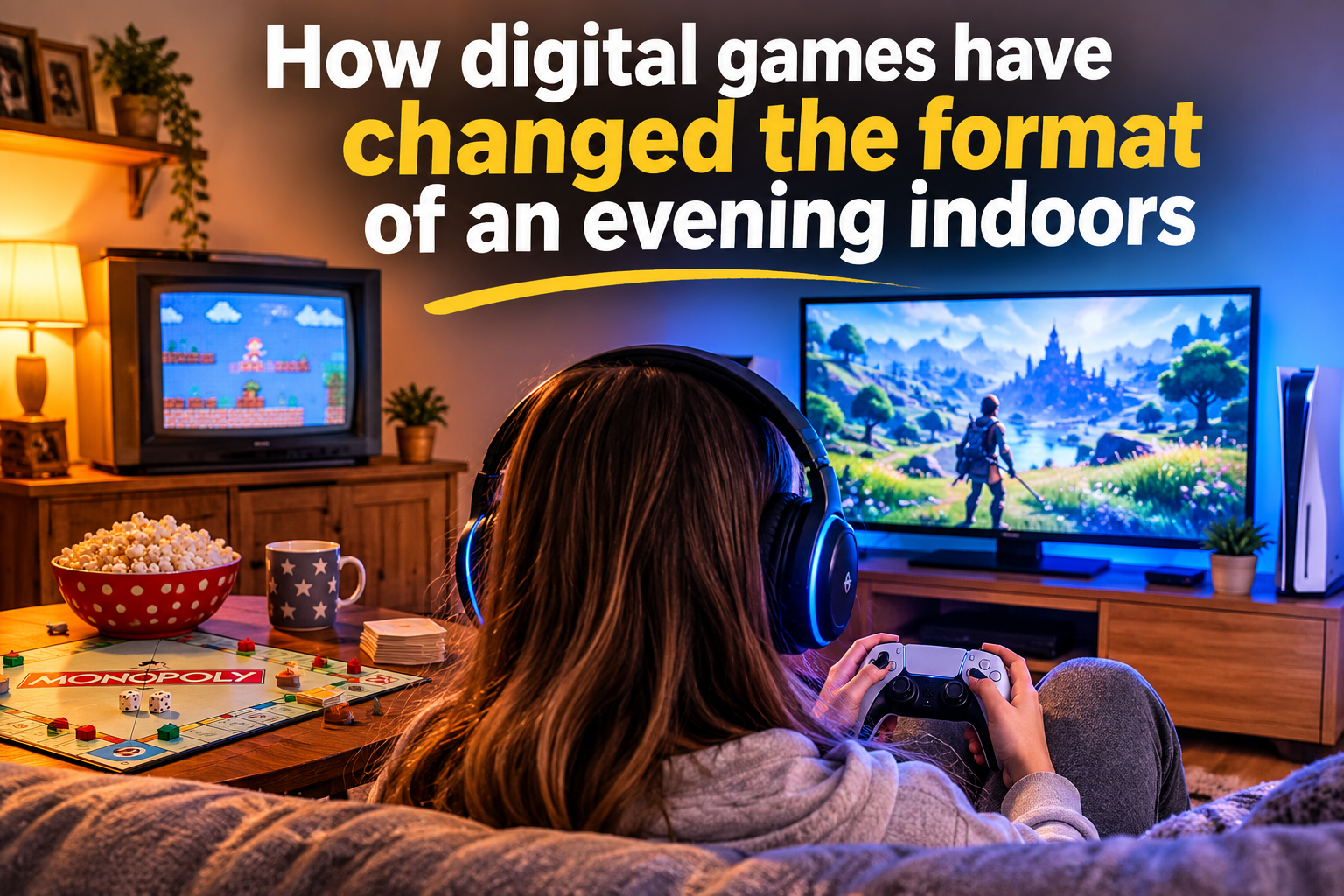
Organising a games night once meant checking who could come round and finding enough controllers or chairs. Now the first question might be which devices everyone owns. Friends can spend an evening together without sharing a room, but getting started can involve accounts, downloads and a surprisingly long discussion about what to play.
For households in Paisley, that creates more ways to keep in touch with people elsewhere. A friend who has moved away can still join a regular session. Someone finishing work late can take part without arranging transport. Staying in can involve a proper social plan rather than an evening of scrolling.
The choice of game matters, though. Something that works well for two experienced players may be a poor fit for a mixed group hoping to chat.
Decide how people will take part
The simplest starting point is the room. If everyone is coming to the same house, look for games that explicitly support local multiplayer. An online multiplayer label does not necessarily mean several people can play together on one television.
Check the player limit and equipment requirements before inviting people. Some games require a controller for each participant. Others let people use their phones to submit answers or control actions on a shared screen.
Remote sessions need different checks. Cross-platform play allows people using different systems to join one another, but support varies by game. Voice chat can also require a separate arrangement.
These details are worth settling in advance. An evening intended for catching up can lose its momentum if the first hour disappears into password resets and software updates.
Roulette without a physical table
Adult paid games are another format that has moved onto personal screens. With online roulette, the physical wheel and betting surface become an interface through which an adult player places a stake and follows the result.
Understanding that format means looking beyond its appearance. Table rules, minimum stakes and the way results are displayed matter more than decorative backgrounds. European roulette has one zero, while American roulette adds a double zero, changing the probabilities even though the layouts look similar.
Roulette is a game of chance. Previous results do not make a number due, and a spending limit should be an amount someone can afford to lose. It belongs in a separate category from a family games night or a free quiz with friends.
On shared household devices, adult accounts also need appropriate access controls. Keeping payment permissions and account details private helps prevent other users making unintended purchases or accessing unsuitable content.
Match the game to the conversation
Some games leave plenty of room to talk. Turn-based games, quizzes and slower cooperative challenges allow people to finish a story or step away briefly without disrupting everyone else.
Fast competitive games demand more attention. They can suit a group that enjoys concentrating on a shared task, but they may frustrate somebody who joined mainly for conversation.
It helps to agree on the kind of evening people want. A casual catch-up and a serious attempt to improve a team ranking require different expectations.
For a mixed group, begin with a short game that explains itself through play. A lengthy tutorial can make newcomers feel as though they are holding everyone up. Familiar players should also resist taking over every decision. Being told exactly what to do can turn participation into watching somebody else play.
Check the full cost before choosing
A game advertised as free may still contain paid items, subscriptions or optional passes. A purchased game may require a separate service for online multiplayer, depending on the platform and title.
The organiser should establish what each person needs to spend. This avoids putting someone in the awkward position of admitting they cannot join after everyone else has bought access.
Check editions carefully too. Similar product names can conceal different bundles, and extra content is not always necessary for the planned session. Start with what the group actually needs.
For occasional gatherings, a game already owned by the host may be better value than a new purchase. There is little benefit in assembling an expensive collection if the same few accessible titles consistently get played.
Make the room work for everyone
Local multiplayer still depends on a comfortable physical setup. A large television is not much help if one person is sitting at an awkward angle or cannot read the text.
Test the view from each seat. Subtitles, interface size and colour settings can make a substantial difference, especially when players are sharing a screen.
Sound needs attention as well. Loud music or overlapping game audio can make conversation difficult. Lowering background effects may help people hear one another without continually reaching for the remote.
Leave somewhere safe for drinks and charging cables. If phones are part of the controls, ask guests to arrive with enough battery. Small practical problems become more irritating when they interrupt every round.
Digital confidence should not be assumed
Someone can be comfortable using a phone every day and still find a new account system confusing. Invitations, privacy settings and unfamiliar menus create obstacles that experienced players may barely notice.
Help is easier to accept when it is offered without turning the setup into a test. Send clear joining instructions and give newcomers time to try the controls before starting a competitive round.
Locally, Renfrewshire Council’s DigiZones provide free help and support with getting online, with Paisley Central Library among the listed locations. That is general digital support rather than a gaming service, but it can help residents build confidence with the technology behind everyday online activities.
Within a group, one patient explanation is usually more useful than several people giving instructions at once.
Give the evening a finish
Online play makes it easy to extend a session by another round. That flexibility is useful until people feel obliged to stay because leaving would disrupt the group.
Agree on an approximate finish and choose a sensible point to stop. Short rounds help when participants have different schedules. Longer games may need a save function or a clear agreement about continuing another evening.
For a regular Paisley group with friends joining remotely, consistency may matter more than the latest release. A familiar game at an agreed time removes much of the organising work.
The evening becomes easier to repeat when everyone knows how to join, what it costs and when they can leave. Those arrangements give the conversation room to happen.