The fit-out and install programme for Paisley Museum will be complete by the end of this year, ahead of reopening to the public early in the new year.
More than 1,800 local Renfrewshire residents have helped co-design the new Museum, from helping shape the design and facilities for the new building, as well as the design of the installations and exhibitions. These have been developed in collaboration with more than 70 local organisations and groups, including more than 500 pupils from across Renfrewshire's schools.
Following completion, an exciting opening programme will bring communities, businesses and partners together to mark the completion of Scotland’s foremost cultural regeneration project, which is expected to attract more than 127,000 visitors each year.
Councillor Lisa-Marie Hughes, Renfrewshire Council's culture spokesperson and Chair of OneRen, said: “I’m delighted that the fit-out and install programme for Paisley Museum will be complete by the end of this year as I know how excited people are to see the transformation inside for themselves and it will be a fantastic start for the new year.
“With more than 1,800 local people having contributed to the redesign of the museum and the stories it will tell, it will be a welcoming place for all our communities to call their own.
"It will also act as an anchor institution for Paisley – attracting visitors to the wider area, supporting local businesses and the economy, and strengthening the town’s national and international profile."
The reimagined museum will present a radical new view of Paisley, Scotland and the world, ensuring local stories are preserved and shared for future generations and told in inclusive and engaging ways as part of a museum campus that includes the historic Coats Observatory, Transit House and Oakshaw buildings.
More than 100 curated displays will be in place, many of which have been co-produced with local people and groups from across the world, and include:
The story of the world-famous Paisley Pattern and how it became synonymous with the town
One of the few surviving copies of Audobon’s Birds of America, an extraordinary four-volume elephant folio
Rare Cook Islands ‘Staff Gods’, among the last surviving examples in the world
The return of the life-sized and much-loved Buddie the Lion
Alexander Wilson, the Paisley-born "Father of American Ornithology"
Fashion icon Pam Hogg and Paisley's textile legacy
Artwork by John Byrne, Steven Campbell and the Glasgow Boys
The redevelopment by Renfrewshire Council in collaboration with OneRen is set to attract more than 127,000 visitors to the town each year to see the museum's internationally significant collections, award-winning architecture and co-produced stories which will create a unique visitor experience.
In an update to Renfrewshire Council’s Leadership Board, councillors were advised the fit-out programme has progressed into all areas of the museum and the majority of objects chosen for display now packed in preparation for the main install programme, with more than double the amount to be on display than previously.
Around 80% of the objects selected required conservation treatment which has been completed and benefited from national and international partnerships agreements with the American Museum of Natural History, New York, The Royal Armouries, Leeds, and The People’s History Museum, Manchester.
Harry Coughlin, Managing Director Museums UK - HUB Build, said: “We’re delighted to be playing a key role in the transformation of Paisley Museum and to see the galleries really beginning to come to life.
“A particular focus for our team has been developing the flexible story display systems, working hard to ensure they are practical while remaining true to OPERA Amsterdam’s beautiful design. This adaptability will allow the museum to reconfigure displays in the future, helping to keep the visitor experience fresh and engaging over time.
“It has been a hugely detailed project, involving the manufacture and installation of a wide range of bespoke exhibition elements to display the vast array of objects, as well as hands on interactives. Our team is continuing to work closely with Renfrewshire Council and the wider project team as we progress the remaining works, and we’re looking forward to seeing the completed museum open its doors to visitors.”
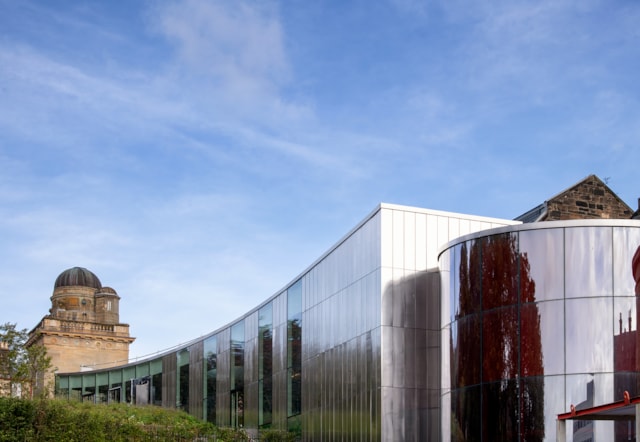
International architects AL_A, led by Stirling Prize winner Amanda Levete and Matt Wilkinson, created an ambitious, striking design that has been brought to life by Kier to create a visitor attraction that will place Paisley firmly among the Europe’s leading museum destinations.
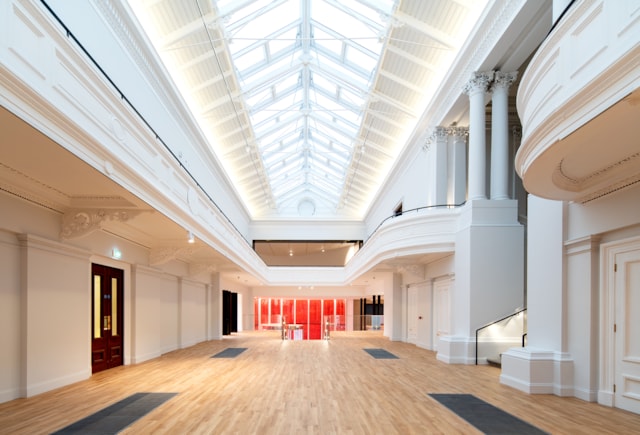
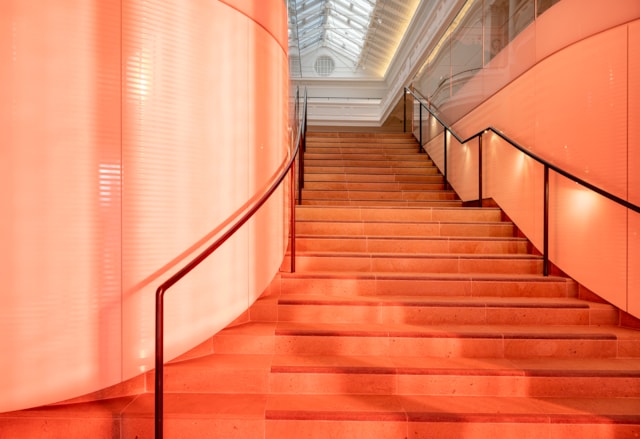
A dramatic red-glass accessible entrance and panoramic extension fronts the Museum transformation with the A-listed main building and Coats Observatory brought up to modern standards, undergoing significant external and internal repairs to deliver refreshed, modern galleries on every floor and double the amount of space available to showcase the Museum’s unique and internationally significant collections.
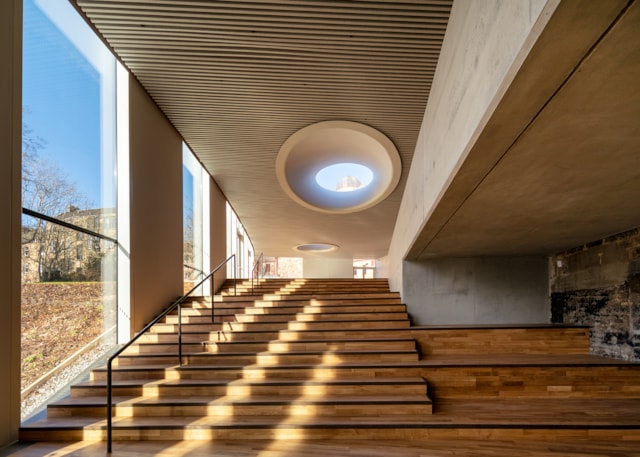
A new outdoor garden and public space has been created, which open up previously hidden views of the observatory as a cohesive museum campus is created between the buildings, and dedicated learning spaces and a heritage centre will enhance the visitor experience further – as will a new café and shop.
The completion of the fit-out programme and the following reopening will be the culmination of a decade of investment by Renfrewshire Council in Paisley’s cultural buildings, its cultural groups and performers, and its festivals and events. It has changed perceptions of the town, given people new reasons to visit, and contributed to it currently being Scotland’s Town of the Year.
The museum project has been funded by Renfrewshire Council, with additional funding from the National Lottery Heritage Fund, Historic Environment Scotland, and the Scottish Government, as well as private fundraising.
For more information on Paisley Museum and its transformation, visit www.paisleymuseum.org.