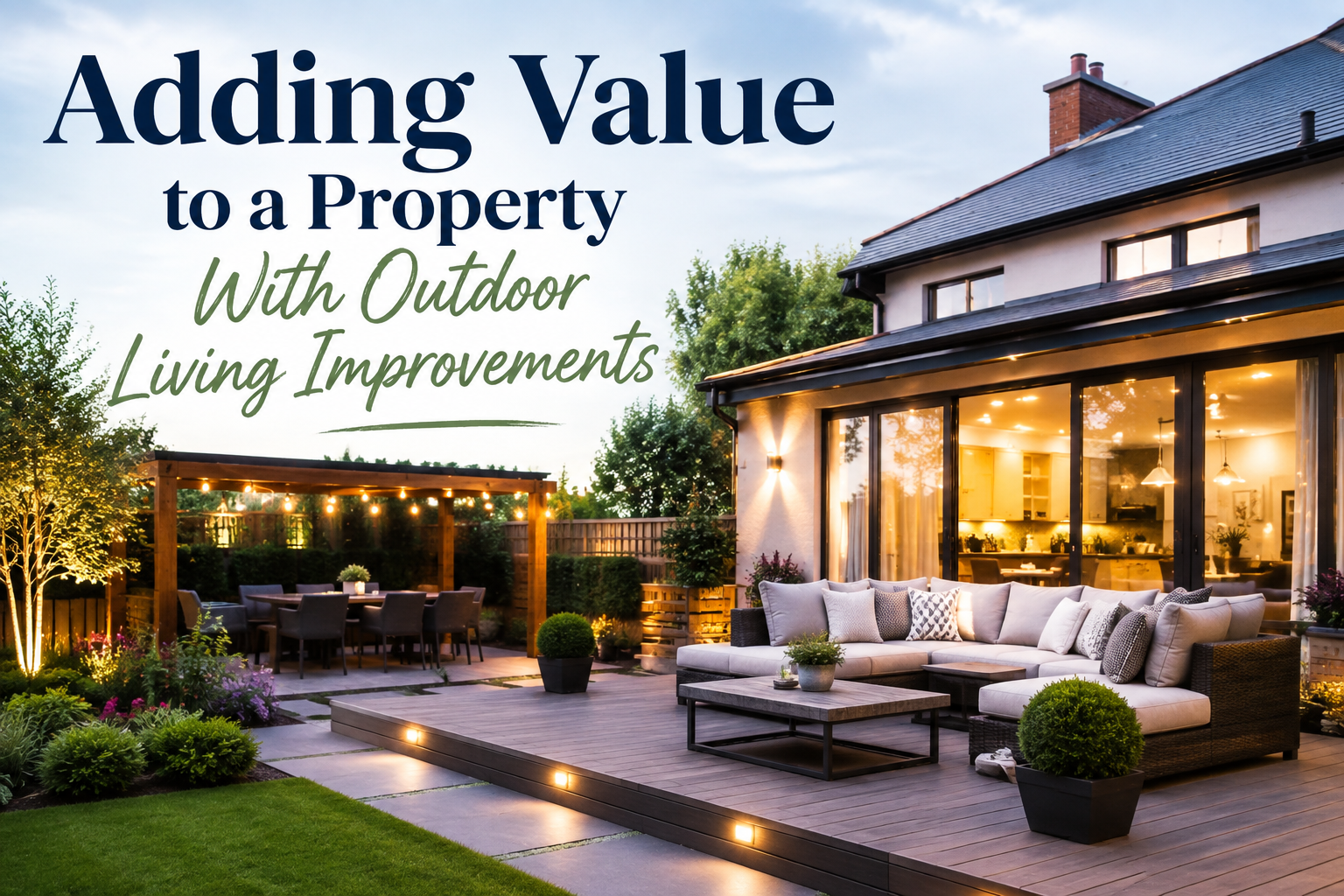
Before spending on anything permanent, it's worth knowing that outdoor living improvements are one of the more reliable ways to add value to a property without the cost of a full extension. A garden that offers somewhere comfortable to sit, eat and entertain tends to appeal to buyers just as much as an extra bedroom, particularly where indoor space is already tight.
Not every improvement needs to be permanent to be worthwhile, and testing an idea before committing serious money often produces a better result than guessing what will actually get used. The sections below cover the improvements that tend to add the most, along with a lower-risk way to try a bigger idea first.
Testing bigger ideas before building them permanently
Committing straight away to a garden room, orangery or covered terrace is a significant outlay, and it's not always obvious in advance how much a household will actually use a large entertaining space until they've lived with one for a season. For homeowners who want to test the idea first, the simplest option is to hire a marquee London for a single event or an entire summer. A marquee can go up on an existing lawn or terrace within a day and come down just as quickly, giving a clear sense of how the space actually gets used before any permanent structure goes up.
That kind of real-world evidence is worth more than any amount of guessing about layout or size, and it means a permanent structure, if one follows, gets built around how the family genuinely uses the garden.
Garden rooms and dedicated outdoor space
A well-built garden room does more than add a pleasant place to sit, since it creates genuinely usable floor space that counts in a buyer's mind even though it sits outside the main house. A separate office, gym or studio space in the garden has become noticeably more sought after since flexible working became the norm, and a well-insulated structure usable all year appeals far more than one usable only through summer.
A well-built garden office has been shown to add a measurable uplift in value, and the same logic extends to outdoor upgrades that genuinely get used rather than sitting empty most of the year. The improvements that add the least tend to be built for a single use most buyers won't need.
Getting the basics right first
More households are now treating the garden as a fifth room rather than an afterthought, which is part of why outdoor upgrades get so much attention around resale value. Even before a bigger structure, simple improvements such as proper drainage, decent lighting and a well-defined seating area make a garden feel finished, and cost far less than any larger project.
Getting these fundamentals right first also protects the value of anything built afterwards, since a beautifully specified garden room surrounded by an overgrown, poorly drained garden won't create the impression that any single feature can deliver on its own.
The improvements that add the most value tend to be the ones that genuinely change how a property gets used day to day, rather than those chosen with a future sale in mind. Testing an idea before committing to it permanently is often the difference between a garden that earns its cost back and one that ends up rarely used once the novelty wears off.