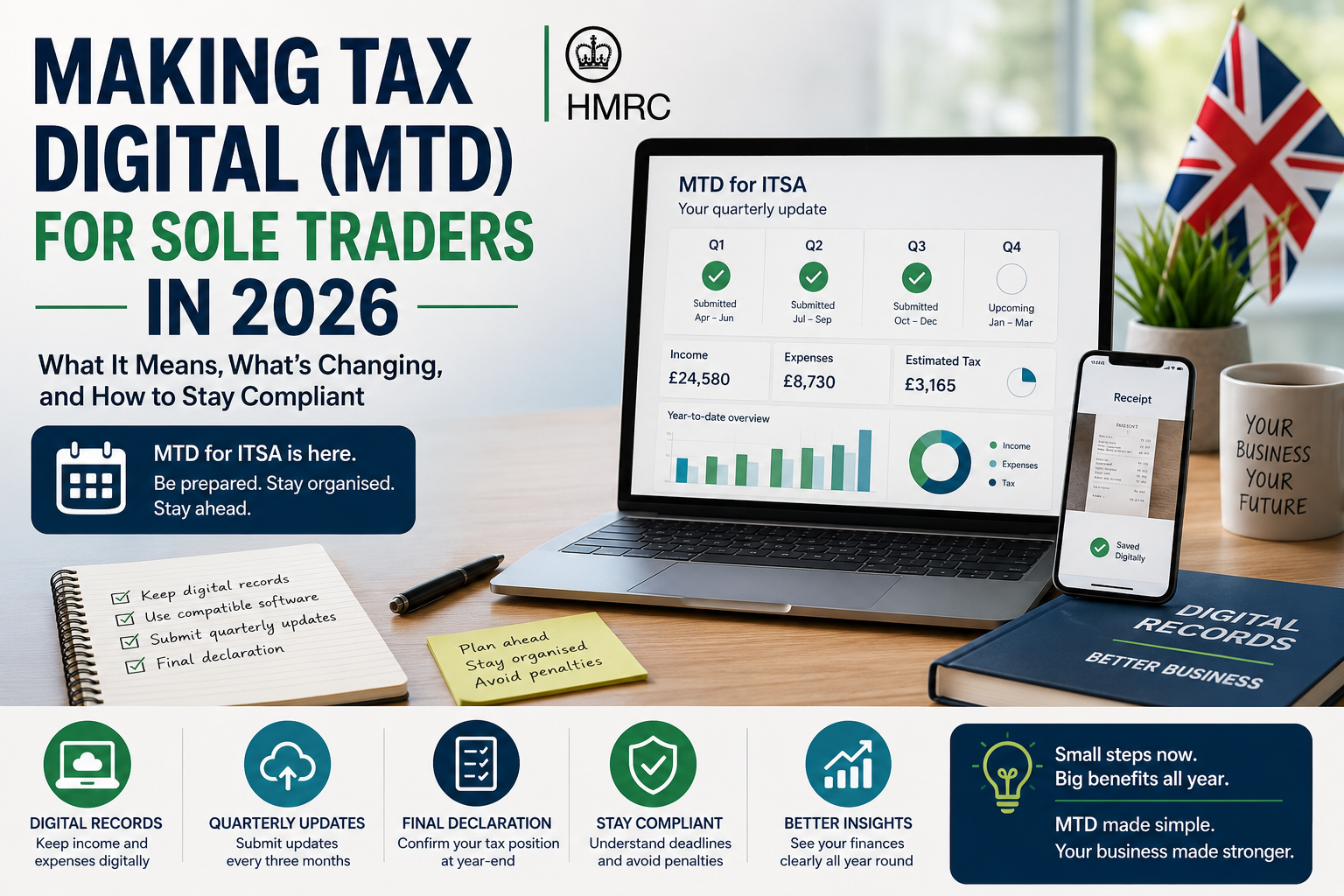
If you are a sole trader or freelancer in the UK, you may have heard about Making Tax Digital (MTD) over the past few years. For many, it has felt like a distant plan from HMRC, something that might affect your business in the future.
In 2026, that future is here. MTD for Income Tax Self Assessment (ITSA) is now becoming a reality for thousands of sole traders, landlords, and freelancers. While the idea of changing how you manage your taxes can feel overwhelming, MTD can make tax admin simpler, more accurate, and less stressful.
This guide explains what MTD means for sole traders in 2026 and offers practical advice to stay organised and compliant.
What Is Making Tax Digital?
Making Tax Digital is HMRC’s plan to move the UK tax system fully online.
Instead of completing one annual Self Assessment tax return with a year’s worth of receipts and records, eligible sole traders will need to:
Keep digital records of income and expenses
Use compatible software to manage accounts
Submit quarterly updates to HMRC
Submit a final declaration at the end of the tax year
The aim is to reduce errors, improve accuracy, and make tax reporting more up to date. VAT-registered businesses have been using MTD for some time, but 2026 marks the next major phase for self-employed workers.
Who Will Need to Comply in 2026?
From April 2026, MTD for ITSA applies to sole traders and landlords with total annual income above £50,000 from self-employment or property.
From April 2027, the threshold will drop to £30,000.
Freelancers, consultants, tradespeople, coaches, designers, and content creators are all likely to be affected. Even if your income is below the threshold now, preparing early can save stress later.
What Will Actually Change?
The biggest change is moving away from spreadsheets, paper receipts, and last-minute tax returns.
Under MTD, you will maintain digital records throughout the year and submit updates every quarter. This does not mean paying tax four times a year. Quarterly submissions are simply updates. You will still make a final year-end declaration to confirm your overall tax position.
Before MTD:
Keep receipts in folders or spreadsheets
Work out totals once a year
Submit one annual Self Assessment
Under MTD:
Record income and expenses digitally as you go
Submit updates every three months
Finalise your tax information at year-end
For many sole traders, this creates better visibility of finances throughout the year and reduces the chance of mistakes.
Why Sole Traders Should Start Preparing Early
Waiting until the last minute is a common mistake.
Getting ready now allows you to:
Learn new systems gradually
Build consistent bookkeeping habits
Avoid compliance stress
Reduce errors and penalties
Understand cash flow more clearly
Small, regular adjustments now prevent the rush and stress that many self-employed workers face in January.
The Role of Digital Bookkeeping
MTD is really about real-time bookkeeping.
Instead of reconstructing your finances at the end of the year, digital tools encourage weekly or monthly updates. You do not need to be an accountant to stay compliant. Modern accounting platforms are designed to simplify the process for sole traders and freelancers.
Many tools can automatically:
Track expenses
Capture receipts digitally
Categorise transactions
Estimate tax liabilities
Generate reports instantly
For sole traders who currently rely on spreadsheets or manual bookkeeping, switching to reliable tax return software can make the transition much easier and far less stressful. Choosing a system that is simple and manageable will make it much easier to maintain consistent records throughout the year.
This helps reduce errors, ensures compliance, and gives you a clearer view of your finances every month rather than waiting until year-end.
Practical Tips for Staying Organised
Separate Business and Personal Finances
A dedicated business account makes tracking income and expenses much easier and reduces confusion during tax season.
Record Transactions Weekly
Set aside a short time each week to:
Upload receipts
Review expenses
Categorise transactions
Check invoices
Monitor income
Consistency matters more than spending hours at once.
Keep Digital Copies of Receipts
Paper receipts fade, get lost, or disappear. Many apps allow you to photograph receipts instantly and store them digitally, creating a cleaner audit trail.
Track Tax Throughout the Year
Regular updates help you estimate tax bills and manage cash flow. This reduces surprises when it comes time to pay HMRC.
Understand Your Deadlines
Quarterly submissions will be part of your routine. Missing deadlines can lead to penalties, so use reminders and notifications to stay on track.
What Happens If You Ignore MTD?
MTD is the future direction of UK tax reporting. Non-compliance could eventually lead to penalties. Starting early avoids unnecessary stress and ensures your business is ready for upcoming changes.
Conclusion
Making Tax Digital is a big change, but it does not have to be intimidating.
It encourages better financial habits and moves away from once-a-year tax panic. By starting early, staying organised, and following simple practices, sole traders can comply with MTD without stress.
Practical habits such as keeping digital records, updating finances regularly, and understanding your deadlines will make MTD manageable and give you a clearer, healthier view of your business finances.